






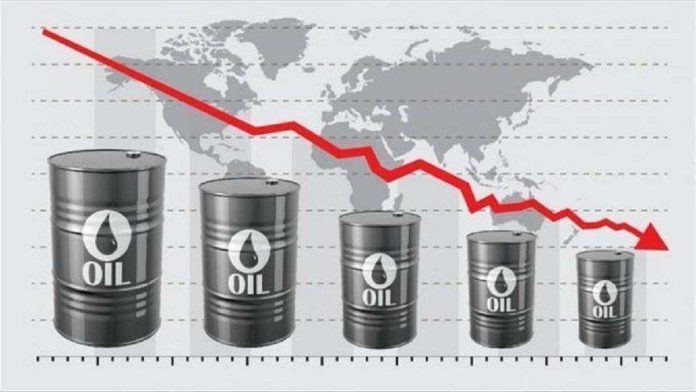
Global crude oil prices edged lower on Tuesday as renewed engagement between the United States government and American oil companies raised expectations that Venezuela’s crude exports could gradually return to international markets.
Brent crude futures declined to $61.50 per barrel, representing a 0.30 percent drop from Monday’s settlement of $61.70. Meanwhile, the U.S. benchmark West Texas Intermediate (WTI) slipped by approximately 0.33 percent to trade at $57.99 per barrel, down from $58.13 at the previous close.
Market sentiment shifted following confirmation from a senior White House official, who disclosed to Anadolu Agency that formal communication with U.S.-based energy companies has commenced and will continue in the coming weeks. The official added that Energy Secretary Chris Wright and Secretary of State Marco Rubio are spearheading the discussions on behalf of President Donald Trump.
White House spokesperson Karoline Leavitt said the administration is actively exploring renewed investment opportunities in Venezuela’s oil sector. According to her, President Trump is keen on collaborating with American oil producers to unlock fresh investment flows and restore oil output in the South American nation.
Earlier this month, on January 3, President Trump publicly signaled a renewed U.S. interest in Venezuela’s energy industry following a major military operation targeting the government of President Nicolás Maduro. At the time, Trump indicated that American oil companies would play a central role in rehabilitating Venezuela’s ageing oil infrastructure, committing billions of dollars in capital to restart stalled production and modernize facilities.
Analysts note that the U.S. administration’s outreach to oil companies has reduced near-term geopolitical risk premiums that previously supported oil prices. However, expectations of increased Venezuelan crude supply have simultaneously exerted downward pressure on prices in the medium term, as markets begin to factor in potential supply expansion.
On the supply side, the Organization of the Petroleum Exporting Countries and its allies, collectively known as OPEC+, maintained existing production quotas during their weekend meeting. The decision reassured markets that no immediate supply surge would occur from the group, helping to limit sharper price declines in the short run.
Despite this, oil prices continue to struggle with broader macroeconomic headwinds. A subdued global demand outlook, combined with rising output from non-OPEC producers, has prevented OPEC+’s decision from generating sustained upward momentum in crude markets.