







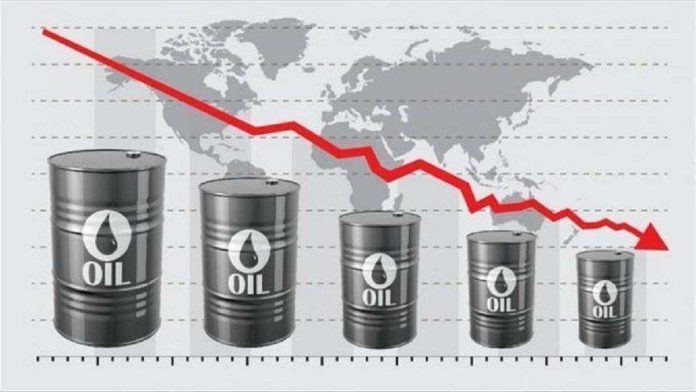
Crude oil prices retreated on Thursday following a surprising increase in U.S. crude inventories and emerging diplomatic progress between Russia and Ukraine, developments that eased prior supply concerns in global markets.
Brent crude, the international benchmark, traded at $62.35 per barrel — down 0.1 percent from Wednesday’s close of $62.42. U.S. benchmark West Texas Intermediate (WTI) also edged lower by about 0.08 percent to $58.44 compared with $58.49 in the previous session.
According to the U.S. Energy Information Administration (EIA), commercial crude inventories climbed by 2.8 million barrels in the past week to reach 426.9 million barrels, contrary to analyst expectations of a 1.3-million-barrel decline.
The U.S. Strategic Petroleum Reserve also saw an upswing, rising by 500,000 barrels to 411.4 million barrels. Gasoline inventories added pressure to the outlook, increasing by 2.5 million barrels to 209.9 million, reinforcing the view that fuel demand remains soft in the United States — the world’s top oil consumer.
The inventory data signaled weaker consumption and a possible continuation of stock build-up, placing additional downward pressure on prices.
Sentiment was further influenced by positive geopolitical signals. Kremlin adviser Yury Ushakov confirmed that U.S. envoy Steve Witkoff is expected in Moscow next week, a step that has raised hopes for a potential ceasefire or the easing of restrictions on Russia’s energy exports.
Analysts note that the combination of higher inventories and softening geopolitical fears could intensify pressure on global oil markets, which are already wrestling with elevated supply levels.
Market attention now turns to Sunday’s OPEC+ meeting. Earlier this month, the alliance agreed to raise December output by 137,000 barrels per day, while eight member states plan to maintain output levels unchanged from January to March due to seasonal considerations.