






The Natural Oil and Gas Suppliers Association of Nigeria (NOGASA) has raised red flags over the Dangote Petroleum Refinery’s move to bypass traditional depots and directly supply fuel to end-users, warning that the strategy could destabilize the entire downstream distribution chain.
Speaking during NOGASA’s Annual General Meeting in Abuja, National President Bennett Korie urged the refinery to suspend its planned nationwide direct delivery and instead engage with key industry stakeholders to avoid systemic disruption. He referenced past missteps by the Nigerian National Petroleum Company Limited (NNPCL) that led to the collapse of their retail network.
Korie appealed to President Bola Tinubu to intervene, stating that while the association has supported the Dangote Refinery’s development, a monopoly-style distribution model could threaten thousands of independent operators, jobs, and the integrity of the current fuel marketing ecosystem.
In response, an official from the Dangote Group dismissed the criticism as “anti-progressive,” asserting that the refinery’s plan was designed to eliminate excessive logistics costs and inefficiencies in fuel movement across the country.
Reacting to the development, Petroleum Products Retail Outlet Owners Association of Nigeria (PETROAN) President Billy Gillis-Harry also expressed concerns, urging Nigerians not to celebrate prematurely. He warned that centralizing refining, distribution, and retail functions under a single corporate entity could result in monopolistic pricing and reduced transparency.
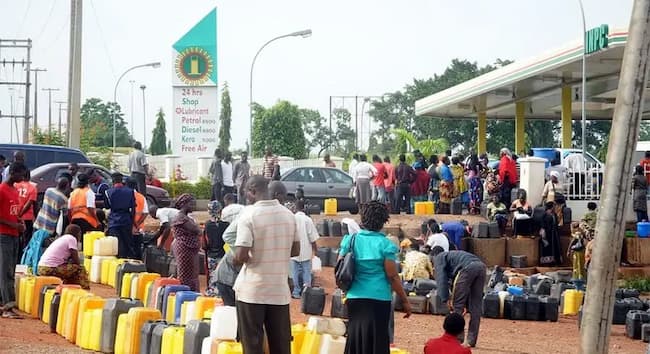
Depot prices have already surged, increasing by 7% from ₦815 per litre on Wednesday to ₦870 per litre on Thursday, intensifying fears of downstream market volatility.
The Dangote Refinery recently announced plans to roll out 4,000 Compressed Natural Gas (CNG)-powered tankers starting August 15 to deliver refined products directly to large-volume consumers such as telecom operators, airlines, manufacturers, and select marketers. The refinery’s estimated ₦720 billion investment in this transport infrastructure is expected to save the Nigerian economy over ₦1.7 trillion annually while boosting productivity among over 42 million MSMEs.
Despite these benefits, NOGASA warns that the move could sideline independent marketers and lead to the dismantling of Nigeria’s existing supply framework. “If the retail outlets are pushed out due to Dangote’s direct sales, restarting the entire chain during disruptions would be nearly impossible,” Korie cautioned.
He also drew parallels to NNPCL’s failed experiment in combining refining and direct retailing, which coincided with the downfall of its domestic refineries.
“We are not opposed to the Dangote Refinery,” Korie stressed. “Our members championed its development. But we must warn against repeating history. We recommend that Dangote focus on refining and wholesaling to marketers, who are equipped to handle last-mile distribution.”
Korie emphasized the importance of collaborative operations that protect all players. “Distributors, especially depot owners and retail station operators, play a critical role in sustaining fuel availability nationwide. Dangote should produce, sell to us, and allow us to handle delivery to the public.”
He revealed that over 50,000 fuel stations and supporting logistics networks could be at risk of collapse if the current distribution model is upended. “Thousands of Nigerians stand to lose their jobs if this isn’t handled carefully,” he warned.
PETROAN President Gillis-Harry echoed this sentiment. “Let’s not forget what monopolies have done in the past. One company refining, stocking, distributing, and even determining price creates a dangerous imbalance. We’ve seen this with cement, where a product that used to cost ₦115 is now over ₦10,000.”
He disclosed that filling station owners are already absorbing losses of up to ₦80 per litre due to the unexpected spike in depot prices.
With the Dangote Refinery now capable of processing 700,000 barrels of crude daily, Gillis-Harry said the company should position itself to compete globally, not dominate Nigeria’s downstream space. He called on regulatory bodies including the Nigerian Midstream and Downstream Petroleum Regulatory Authority (NMDPRA) and the Ministry of Petroleum Resources to immediately enforce pricing control, ensure local crude availability for domestic refineries, and introduce regulations to safeguard industry jobs.
NOGASA, PETROAN, NATO, and other stakeholders are now calling for urgent government intervention and a formal negotiation platform to protect the long-term future of Nigeria’s fuel supply and distribution architecture.


 has raised red flags over the Dangote Petroleum Refinery’s move to...)