










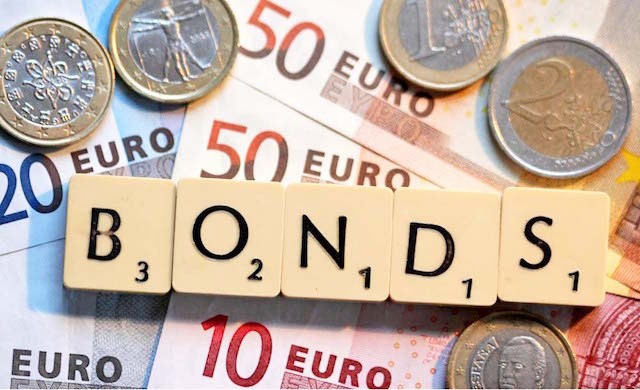
Yields on Nigerian Eurobonds climbed in the international debt market as foreign portfolio investors (FPIs) began scaling back their exposure amidst renewed global trade tensions triggered by fresh U.S. tariff threats.
Market participants observed a bearish sentiment across the board, with widespread selloffs spanning short-, mid-, and long-term bonds. The SEP-2028 bond faced the most notable pressure, driving the average yield upward by 3 basis points to 8.54%.
Analysts point to a cautious shift among international investors following Washington’s recent announcement of new tariff measures: 25% duties on select imports from Japan and South Korea, along with a 10% levy targeting nations affiliated with the BRICS alliance. This development follows BRICS leaders openly criticizing U.S. trade practices during their recent summit, injecting uncertainty into emerging markets.
Nigerian Eurobonds bore the brunt of the market response, posting yield increases as investors reassessed risk exposure in light of the ongoing global economic recalibrations. However, rising oil prices continue to offer a cushion, particularly for debt instruments from Nigeria and Angola.
Domestically, Nigeria’s economic trajectory remains optimistic for the second half of 2025. Buoyed by improved macroeconomic stability, the World Bank projects 3.6% GDP growth, while the Central Bank of Nigeria (CBN) forecasts 4.2%, and the IMF estimates 3%. Authorities are also working toward rebasing GDP to 2019 levels to reflect emerging sectors like fintech, digital media, and entertainment—potentially lifting Nigeria’s official economic output.
Meanwhile, inflationary trends have eased slightly. Thanks to a more stable naira and slower growth in energy costs, headline inflation inched down to 22.97% in May 2025 from 24.48% in January. Monthly inflation declined significantly to 1.58% from a staggering 10.71% earlier in the year.
Food inflation averaged 21.14%, while core inflation stood at 22.6%. Despite these improvements, consumer prices remain elevated, with full-year inflation expected to hover around 21% year-on-year.



 began scaling back....)