







The Federal Government has unveiled a proposed N54.43 trillion budget for 2026, even as debt servicing is projected to consume N15.91 trillion, signalling growing fiscal strain and a widening gap between revenue and expenditure.
According to the 2026–2028 Medium-Term Expenditure Framework and Fiscal Strategy Paper approved by the Federal Executive Council on Wednesday, the government expects to generate N50.74 in revenue next year and achieve an economic growth rate of 4.68 per cent. However, the projected N20.10tn deficit marks a sharp expansion, exceeding the entire 2022 national budget by N2.78tn, The PUNCH reports.
Analysts warn that such a steep deficit — which accounts for 36.9 per cent of the spending plan — could intensify Nigeria’s fiscal vulnerability, strain the macroeconomic environment, and heighten pressure on households and businesses in 2026.
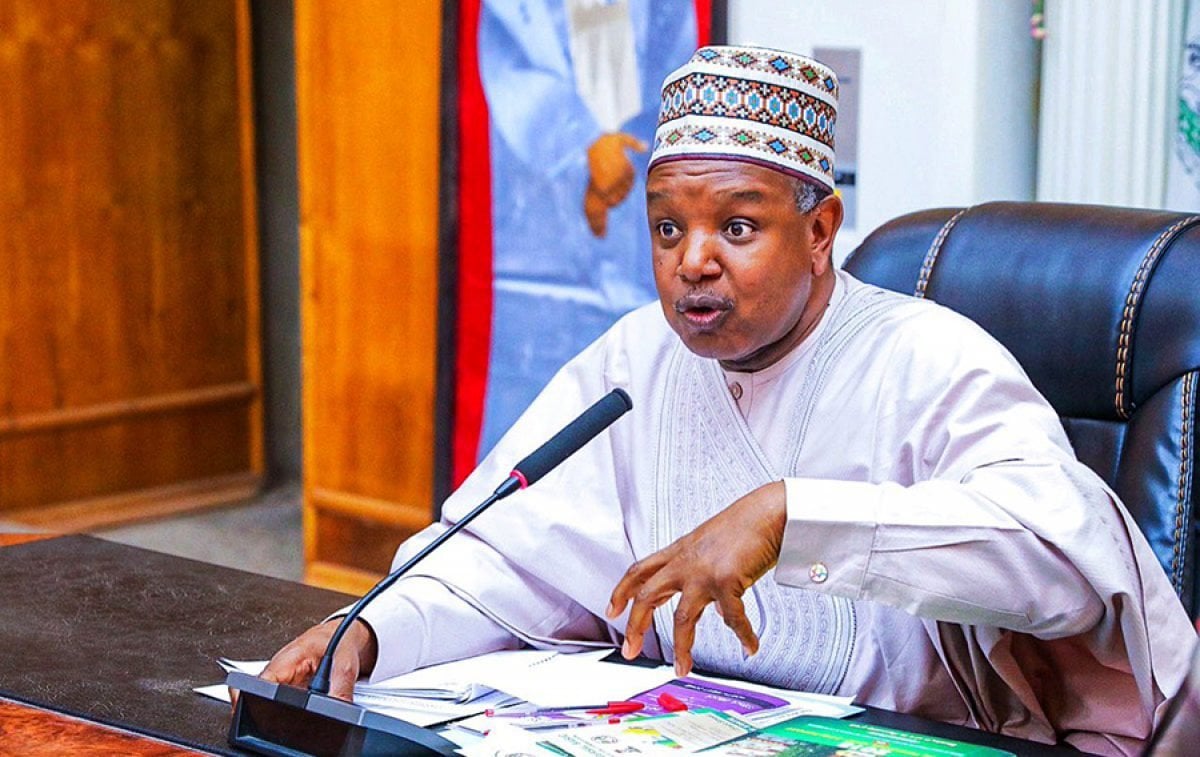
Briefing State House correspondents after the FEC meeting, the Minister of Budget and Economic Planning, Atiku Bagudu, said the MTEF/FSP would be transmitted to the National Assembly on Monday. He noted that the fiscal assumptions were informed by extensive consultations with ministries, private sector stakeholders, civil society groups and development partners.
Conservative Oil Benchmarks and Dual Production Estimates
Bagudu explained that the framework was built on a cautious oil price benchmark of $64.85 per barrel and an exchange rate assumption of N1,512/$ for 2026. He added that for the first time, government adopted dual crude oil production figures: an industry target of 2.06 million barrels per day and a conservative budget benchmark of 1.8 million barrels per day, offering a 12.6 per cent buffer against supply disruptions.
He cautioned that increased political spending ahead of the 2027 elections could intensify pressure on the naira, adding, “Given that 2026 is a pre-election year, there is a lot of election activity spending that can typically affect the exchange rate.”
Revenue Allocation and Rising Obligations
Of the projected N50.74tn Federation revenue:
N22.60tn is allocated to the Federal Government,
N16.30tn to state governments, and
N11.85tn to local governments.
The Federal Government expects to receive N34.33tn from all revenue sources, including N4.98tn from government-owned enterprises — a figure 16 per cent lower than the 2025 estimate.
Key spending areas include:
about N3tn in statutory transfers,
N15.27tn in non-debt recurrent expenditure,
N15.91tn for debt servicing.
Debt service will account for 29.2 per cent of total spending, meaning nearly three in every ten naira spent next year will go toward servicing existing obligations.
The scale of the projected deficit means Nigeria intends to borrow more than one-third of its total 2026 expenditure. By comparison, the 2025 budget of N54.99tn carries a deficit of N9.22tn, making the 2026 gap more than double — a rise of 118 per cent.
Historical comparisons also highlight the growing burden: the amended 2022 budget stood at N17.32tn, with a debt service bill of N3.98tn. The 2026 debt service projection of N15.91tn represents a 299 per cent increase in four years. Recurrent spending has risen from N7.11tn in 2022 to N15.27tn proposed for 2026, an increase of 115 per cent, while capital spending has grown at a slower pace.
Bagudu said the fiscal framework reflects insights from the 2025 budget performance review and expert consultations across critical sectors. He added that President Bola Tinubu had secured National Economic Council support for stronger coordination between fiscal and monetary authorities and renewed investment in security infrastructure and revenue protection across the oil, gas and solid minerals sectors.
Economists Warn of Heightened Fiscal Risks
Economists who spoke to The PUNCH have expressed concern that the Federal Government’s plan to run a N20.10tn deficit in 2026 could reverse the fragile macroeconomic stability recorded in recent months.
The CEO of the Centre for the Promotion of Private Enterprise, Dr Muda Yusuf, warned that Nigeria is edging closer to a “debt trap” if it continues to accumulate obligations at the current pace.
“We need to worry about debt sustainability,” he said. “High levels of deficits and high levels of debt can choke the fiscal space and lead to a vicious circle of debt.”
He noted that Nigeria had recently achieved modest macroeconomic stability, cautioning that a sharp rise in borrowing could fuel inflation and intensify exchange rate pressures.
Similarly, economist and professor at Olabisi Onabanjo University, Sheriffdeen Tella, questioned the timing and basis of the 2026 budget, arguing that the government had barely begun implementing the 2025 budget before rolling out new projections.
“There is no basis for any budget because what they had, they have not implemented,” he said, warning that Nigeria risks operating multiple budgets concurrently — a sign of fiscal disorder.
He added that the sharp rise in the deficit suggests that the figures were not grounded in performance indicators, describing the process as unclear and poorly aligned.
The President of the Nigerian Economic Society, Prof. Adeola Adenikinju, also raised concerns about the breakdown of the January–December budget cycle, saying the late approval of the MTEF shows that Nigeria is drifting further off course.
“The 2026 budget should have been in the National Assembly for consultation so that we can keep to this January 1st timeline,” he said.
Adenikinju noted that the proposed deficit violates the Fiscal Responsibility Act, which caps the deficit at 3 per cent of GDP, and expressed worry that excessive domestic borrowing will raise interest rates, crowd out private investment and worsen economic hardship.
He also questioned the efficacy of government spending, pointing out that late capital releases undermine the developmental impact of projects despite rising borrowing levels.
A Challenging Fiscal Path Ahead
With debt servicing consuming a growing share of the budget, recurrent expenditure rising steadily and deficits expanding faster than revenues, experts say Nigeria must urgently re-establish fiscal discipline, restore predictability to the budget process, and prioritise productive spending to avoid deeper macroeconomic instability in the coming years.