







The Federal Government has entered the final stage of negotiations with the Academic Staff Union of Universities (ASUU) and other tertiary education unions in an effort to prevent further disruptions in Nigeria’s higher education system.
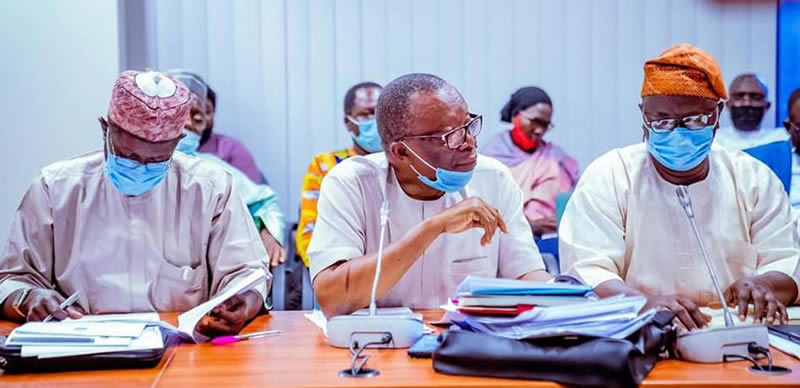
Minister of Education, Dr. Tunji Alausa, disclosed this in Abuja on Wednesday during a session of the Technical Working Group on Conditions of Service for ASUU, where he expressed optimism that the protracted industrial issues would soon be resolved.
Alausa said the team was finalizing a counterproposal to be submitted to the unions through the Allied General United Federal Government Tertiary Institutions Negotiations Committee, adding that the process aligns with President Bola Tinubu’s directive to ensure uninterrupted academic activities nationwide.
“The President has made it clear that our children must remain in school. The working group is putting finishing touches on the condition of service document and a counteroffer for ASUU,” Alausa stated.
“Hopefully, by the end of today or tomorrow, the negotiation committee will receive that counteroffer.”
According to him, 80 percent of the unions’ demands are similar across various tertiary institutions, while the remaining 20 percent relate to sector-specific concerns. He confirmed that the committee, inaugurated earlier in the week, had intensified discussions to speed up implementation timelines and finalize agreements.
The minister also highlighted progress made by the Tinubu administration, including the ₦50 billion Earned Academic Allowance recently disbursed and an additional ₦150 billion earmarked in the 2025 budget for needs assessment in tertiary institutions. The fund, he said, would be released in three phases, with the first ₦50 billion already approved.
“Our academics and non-academic staff deserve fair compensation, but we must balance this with fiscal responsibility,” he said.
“This administration remains committed to improving the welfare of university workers while ensuring sustainability.”
Alausa further confirmed that outstanding promotion arrears and other allowances — including teaching and wage awards — have been largely addressed, with the remaining obligations expected to be cleared by 2026. He urged the unions to adopt dialogue over strikes, emphasizing the government’s commitment to transparent engagement.
“We have resolved most of the issues and are now addressing the last component — the condition of service. We appeal to the unions for patience,” he said.
“This government has demonstrated sincerity and consistency in its approach to education reform.”
For the first time, Alausa noted, the Solicitor General of the Federation and officials from the Ministry of Justice are directly involved in the negotiation process to ensure the legal soundness and enforceability of all agreements reached.
He added that this collaborative approach reflects the administration’s resolve to strengthen labor relations, improve the education sector, and build long-term stability in Nigeria’s tertiary institutions.






 and other tertiary...)