





Facebook Instagram Linkedin Twitter Youtube
  • HOME
  • FEATURES
    • HOW-TOs
  • VIEWPOINT
  • INTERVIEWS
  • VIDEOS
    • HOW-TOs
    • MUSTARD SEED SERIES
  • BEST DEALS
  • EVENTS
  • NEWSLINK
  • MEDIA OUTREACH
Search
Saturday, December 6, 2025
Facebook Instagram Linkedin Twitter Youtube
Sign in
Welcome! Log into your account
Forgot your password? Get help
Password recovery
Recover your password
A password will be e-mailed to you.
BizWatchNigeria.Ng
  • HOME
  • FEATURES
    • AllHOW-TOs
      How People Are Navigating CBN’s Crypto Ban In Nigeria

      How To Build A Crypto Investment Portfolio With Just $100–$200: A…

      Detty December 2025: The Ultimate Day‑By‑Day Event Guide- Full List !!

      Thursday Chronicles: The Cost Of Living And The Cost Of Surviving…

      Cheating In Relationships: How To Recognise Emotional, Digital, And Physical Betrayal

  • VIEWPOINT
    • Davido Donates N234m To 424 Orphanages

      Davido Net Worth 2025: Breaking Down The Music Star’s $100 Million…

      Top 10 Stocks To Buy In September 2025: CSL Stockbrokers’ Expert…

      Nigerian Men, Stop Running Away From Marriage: Be Responsible And Be…

      Dangote To Collapse Business Subsidiaries Structure

      Dangote Attacks Imported Diesel Quality, Orders Investigation

      Global Solidarity to Eradicate Poverty: Celebrating International Day of Charity 2023

      Global Solidarity To Eradicate Poverty: Celebrating International Day Of Charity 2023

  • INTERVIEWS
  • VIDEOS
    • HOW-TOs
    • MUSTARD SEED SERIES
  • BEST DEALS
  • EVENTS
  • NEWSLINK
  • MEDIA OUTREACH
Home Sectors BUSINESS & ECONOMY Excess Crude Account Failing in its Goals, says IMF
  • Sectors
  • BUSINESS & ECONOMY
  • [ MAIN ]
  • COVER
  • NEWSLETTER

Excess Crude Account Failing in its Goals, says IMF

April 13, 2019
Facebook
Twitter
Pinterest
WhatsApp
Linkedin
Email
Telegram
    Nigerian Economy
    • Justifies country’s poor ranking in Sovereign Fund usage
    • Says fuel subsidy should target the poor

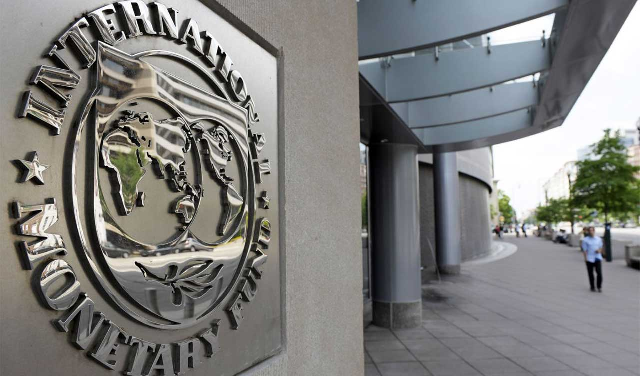
    The International Monetary Fund (IMF), yesterday in Washington DC, United States, declared that Nigeria’s Excess Crude Account (ECA) was not achieving the goals for which it was set up.

    Speaking during a media briefing on “Regional Economic Outlook: sub-Saharan Africa”, IMF’s Director of the African Department (AFR), Abebe Selassie, said: “The concern that we have is about the ECA, because if you recall that the ECA economically was set up to save resources when oil prices are high, and to be drawn on when oil prices are low. We do not think that the ECA has been doing effectively enough jobs that way.

    “Because you see, when oil prices fell, the economy was very hard in the last couple of years, we feel like much better job could have been done, saving enough more in the ECA when oil prices were at $100 and $120 per barrel.”

    The poor performance of the ECA, the IMF chief said, largely influenced IMF’s decision to rank Nigeria second worst in the world in the use of Sovereign Wealth Funds.

    The Bretton Wood Institution rating was based on the corporate governance and transparency scores of the sovereign wealth funds and the size of assets as a percentage of 2016 GDP of the countries considered.

    Selassie, who was speaking on the reactions trailing the negative ranking, said: “I want to be precise on this issue because I have heard a lot of noise concerning it. There have been two Sovereign Wealth Funds in Nigeria. There have been the Excess Crude Account (ECA), and the Nigeria Sovereign Investment Authority (NSIA). The NSIA is running transparently, on standard best practice and it has been doing a good job.”

    Also justifying why removal of subsidy was important, Selassie said it was because the lion share of the benefit of the subsidy went to the rich people.

    According to him, “If you think of the subsidy, who drives the big cars, who uses the biggest generators in Nigeria? It is not to say poor people are not going to benefit when subsidies are removed that is why our advice is that policies like subsidy removal has to be tied to social protection measures for the poorest people.

    “We need to do this. In aggregate, if you have hundred dollars being spent on subsidy, my sense is the lion share – 70 to 80 per cent tend to go to the richer people. So, what we have to do is introduce reforms, find a way for the poor to benefit more. I think it is better to use that resource to invest in health, to build more roads and education.”

    He expressed optimism that the African Continental Free Trade Agreement (AfCFTA), a trade agreement between 49 African Union member states, which aims to establish single market followed by free movement and a single-currency union, would achieve integration among member states.

    “From our perspective, we think that the AfCTA will help the region integrate. It has been the dream of our leaders dating back to independence days and we think that it is a very important initiative and beyond politics, it will have a positive impact economically.

    “Like all trade agreements, like all integration measures, there can be adverse effects, but can these be identified and policies introduced to address them? We have to look at the big picture. Coming to Nigeria specifically, we think that Nigeria will also benefit as the largest economy from joining the AfCTA and being a full participant of that.”

    Source: THISDAY

    Facebook
    Twitter
    Pinterest
    WhatsApp
    Linkedin
    Email
    Telegram
      Previous articleAPC Plays ‘Cameroonian’ Card against Atiku at Election Petition Tribunal
      Next articleCBN Governor Dangles Nigerian Market Before Investors in Washington
      Victor Okeh
      Victor Okeh is a graduate of Economics from Lagos State University. He is versatile in reporting business and economy, politics and finance, and entrepreneurship articles. He can be reached via – victor.o@bizwatchnigeria.com.

      RELATED ARTICLESMORE FROM AUTHOR

      Treasury Bills Auction Delivers Unexpected Rate Upswing

      2025 Congress Of Nigerian Maritime Media Practitioners’ Annual Workshop

      Dollar To Naira Exchange Rate For 8th Dec 2023

      Dollar To Naira Exchange Rate For 5th December 2025

      LEAVE A REPLY Cancel reply

      Log in to leave a comment

      Special Report

      LBS Breakfast Session Report: Not All That Glitters Is Gold!!!
      INFORMAL ECONOMY REPORT 2024: Empowering Nigeria's Informal Economy through Digital Banking
      LBS Monthly Report - The State of the Nigerian Economy, April 2024
      Nigeria's Tax Landscape Undergoes Transformation in 2023: Key Highlights of Fiscal Events
      Economic Outlook 2024: NGX Emphasizes Capital Markets as Catalyst for Growth
      2024 Budget Analysis: Nigeria Braces for 18-Month Economic Recovery Journey Amid Debt Woes
      ABOUT US
      BizWatchNigeria.Ng is a sector-based online news and business intelligence portal managed by Bizwatch Nigeria Limited. We point you to the latest news, information and business intelligence on your business sector, at the click of a button, on a daily basis.
      FOLLOW US
      Facebook Instagram Linkedin Twitter Youtube
      © 2025 - BizWatchNigeria.Ng

      We are using cookies to give you the best experience on our website.

      You can find out more about which cookies we are using or switch them off in .

      MORE STORIES
      ChatGPT Demand On Google Hits A Record High As China Dominates Interest

      OpenAI Rushes Out GPT-5.2 After ‘Code Red’ Warning

      December 6, 2025
      BizWatchNigeria.Ng
      Powered by  GDPR Cookie Compliance
      Privacy Overview

      This website uses cookies so that we can provide you with the best user experience possible. Cookie information is stored in your browser and performs functions such as recognising you when you return to our website and helping our team to understand which sections of the website you find most interesting and useful.

      Strictly Necessary Cookies

      Strictly Necessary Cookie should be enabled at all times so that we can save your preferences for cookie settings.