





The price of Compressed Natural Gas (CNG) has surged from N230 to N450 per Standard Cubic Metre (SCM) following the Federal Government’s recent decision to reduce subsidies, exacerbating challenges posed by long queues and limited refilling stations across Nigeria.
According to retailers, the Nigerian National Petroleum Company (NNPC) Gas Marketing Limited reviewed the price upward, with trucks now paying N450/SCM, while commercial and private car drivers benefit from partial subsidies, paying N380/SCM. An anonymous official from the Presidential Compressed Natural Gas Initiative (PCNGI) confirmed the price adjustment, noting that the lower rate for commercial vehicles aims to stabilize transportation costs. “The price is subsidized for commercial vehicles to keep transport fares affordable. Trucks pay more, while buses and private cars get a reduced rate,” the official explained.
A major CNG retailer, speaking anonymously, revealed that the government had capped CNG prices below cost since the 2023 petrol subsidy removal to encourage adoption. However, the retailer warned that prices could soon rise to N500 or N600/SCM to attract investors. “The government sold CNG to marketers at a subsidized rate to promote its use, but the new pricing reflects a shift to make the sector more sustainable,” the retailer said.
The price hike, coupled with insufficient refilling stations, has raised concerns among vehicle owners. Adeyemi Paul, a ride-hailing driver, highlighted the frustration: “Some spent N1.5m to convert their vehicles to CNG, expecting a cheaper alternative. Now, with long queues stretching up to 1.5km and rising prices, many may revert to petrol.” He questioned the government’s promotion of CNG as a cost-effective fuel, noting that the price difference with petrol is shrinking.
The PCNGI official emphasized efforts to address the shortage of refilling stations. “Our priority is increasing CNG availability by building more stations. We want to ensure no converted vehicle owner struggles to find fuel,” the official said, acknowledging that limited access forces some drivers to rely on petrol.
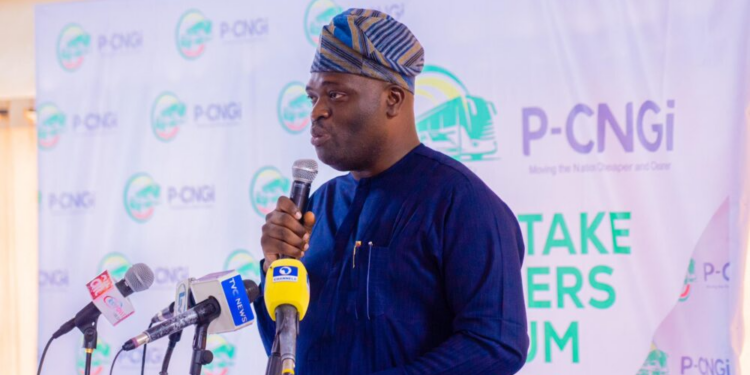
In June 2025, the Federal Government reported significant progress in its CNG initiative, with over 100,000 vehicles converted from petrol to CNG within a year. Michael Oluwagbemi, Programme Director of PCNGI, noted that the number of CNG-powered vehicles grew from under 4,000 to nearly 100,000, with conversion centres expanding from seven to 265 nationwide. Operational refilling stations increased from 20 in late 2023 to 60, with 175 more under construction. “Over the next three months, we plan to commission an additional 100 stations,” Oluwagbemi said, defending the pace of implementation: “Those who led Nigeria into the fuel subsidy crisis cannot fairly criticize our efforts to address it.”
Despite these efforts, the rising CNG prices and persistent queues threaten to undermine the initiative’s gains. Louis Ibah, spokesman for the Minister of Petroleum Resources (Gas), Ekperikpe Ekpo, was unavailable for comment, and the NNPC’s new spokesperson could not be reached. With the government’s push for CNG as a cheaper alternative to petrol following the 2023 subsidy removal, stakeholders worry that further price hikes could discourage adoption and erode public confidence in the initiative.


 has surged from N230 to N450 per Standard Cubic Metre (SCM) following the...)