








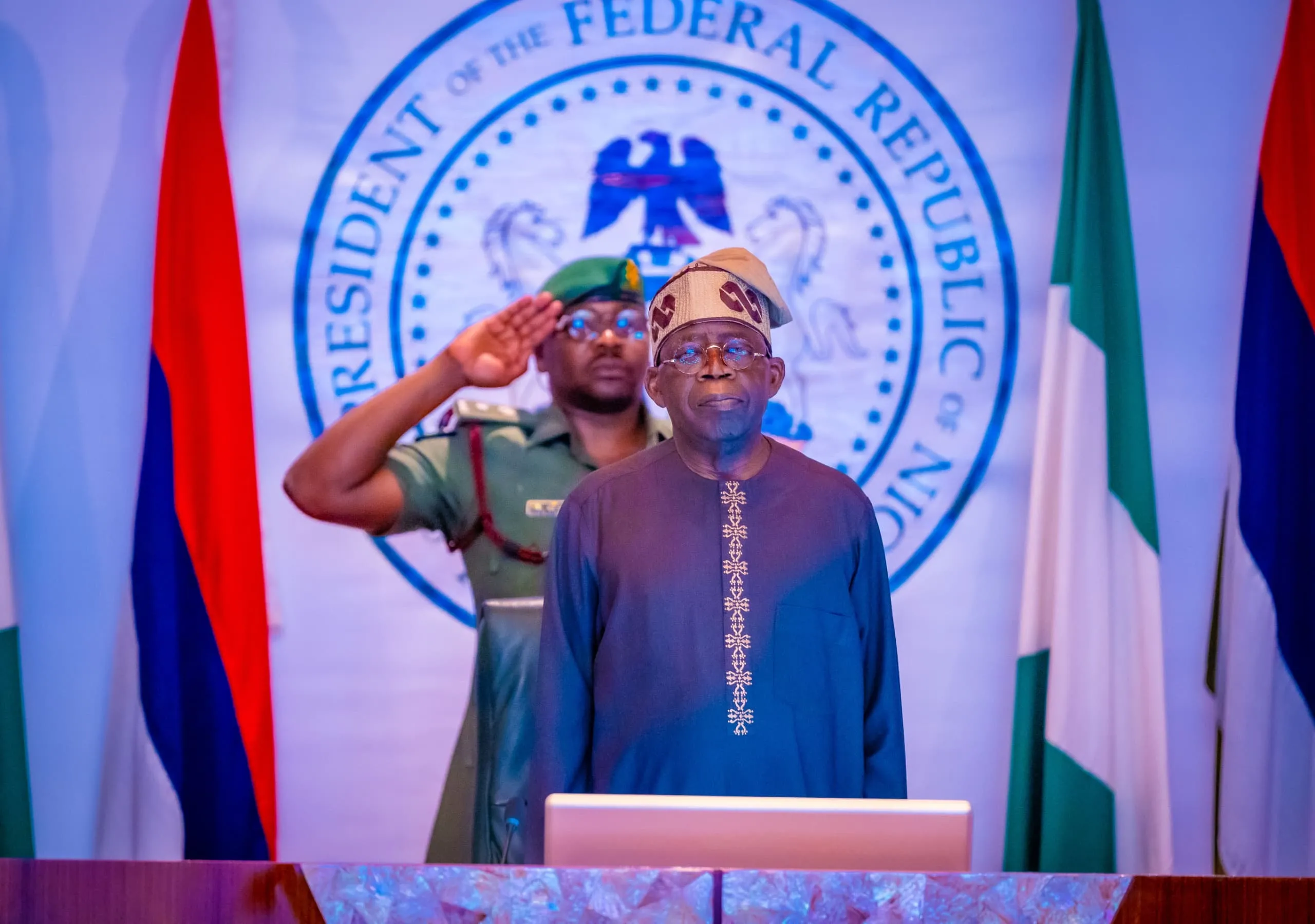
President Bola Tinubu has approved the cancellation of a substantial portion of debts owed by the Nigerian National Petroleum Company Limited (NNPC Ltd) to the Federation Account, clearing approximately $1.42 billion and N5.57 trillion following an extensive reconciliation exercise.
The approval was documented in a report prepared by the Nigerian Upstream Petroleum Regulatory Commission (NUPRC) and presented at the Federation Account Allocation Committee (FAAC) meeting held in November 2025.
The debt relief follows a comprehensive review of NNPC’s outstanding financial obligations, which had previously stood at $1.48 billion and N6.33 trillion. These liabilities were linked to Production Sharing Contracts, Direct Sale Direct Purchase arrangements, revenue allocation balances, miscellaneous crude liftings, and unpaid joint venture and PSC royalties.
According to the NUPRC, the Presidency authorised the clearance of the majority of these balances, resulting in the elimination of 96 percent of the dollar-denominated debt and 88 percent of the naira-denominated obligations.
The move is part of broader efforts by the federal government to resolve long-standing disputes surrounding NNPC’s legacy debts, many of which have accumulated over several years due to reconciliation gaps and disputed remittance figures.
While the bulk of historical liabilities has now been extinguished, the NUPRC disclosed that newer obligations incurred between January and October 2025 remain outstanding. These include $56.8 million linked to PSC and miscellaneous crude liftings, as well as N1.02 trillion in unpaid joint venture royalty receivables.
The commission confirmed that the necessary accounting adjustments have already been reflected in the Federation Account to formalise the debt cancellation.
However, the decision has triggered debate among fiscal analysts and sub-national governments. Critics argue that writing off such a large sum reduces the pool of funds available for distribution to states and local governments, potentially worsening revenue pressures at a time of mounting public debt.
Concerns have also resurfaced over transparency and accountability within Nigeria’s oil revenue management framework. The World Bank has previously flagged inconsistencies between NNPC’s reported earnings and actual remittances to the Federation Account, calling for stronger oversight mechanisms.
The multilateral lender also noted that NNPC has been remitting only about half of the revenue gains from the removal of the petrol subsidy, raising questions about fiscal discipline and revenue optimisation.
Meanwhile, a FAAC sub-committee has instructed NNPC Ltd to engage audit firm Periscope Consulting to reconcile records relating to an alleged $42.37 billion under-remittance between 2011 and 2017. That dispute remains unresolved, with reconciliation talks ongoing.
While President Tinubu’s approval marks a decisive step toward clearing legacy financial disputes, analysts caution that the short-term impact on federation revenues could intensify fiscal stress for states already grappling with declining allocations.







 to the Federation Account, clearing approximately $1.42 billion and N5.57 trillion following an extensive reconciliation exercise.)