










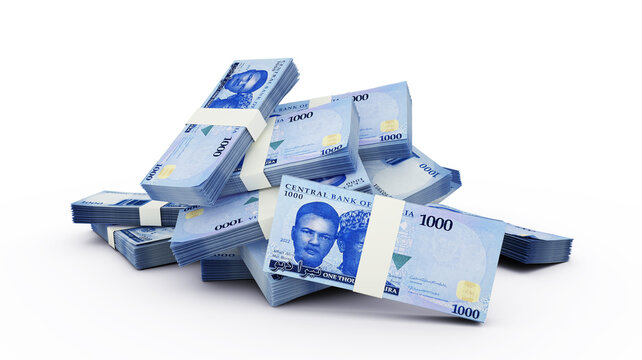
The Nigerian naira recorded fresh losses at the official foreign exchange window, underscoring persistent pressure in the currency market as demand for U.S. dollars continued to outweigh available supply despite ongoing intervention by the Central Bank of Nigeria (CBN).
At the Nigerian Foreign Exchange Market (NFEM), official data showed that the naira depreciated by 0.16 per cent to close at ₦1,457.84 per dollar, compared with ₦1,455.49 recorded in the previous trading session.

Market participants attributed the weakening to insufficient dollar inflows from key sources, including the apex bank, exporters, foreign portfolio investors, and non-bank corporates. These inflows, according to analysts, remain inadequate to significantly rebalance the foreign exchange market.
Intraday trading data revealed that the naira touched a session low of ₦1,462.90 per dollar, marking the highest exchange rate recorded in December and highlighting the continued strain on the local currency. Spot rates were also quoted around ₦1,456 per dollar, the weakest level seen in the past two weeks.
Although the monetary authority has sustained its FX intervention sales, traders noted that the impact has only tempered volatility rather than eliminated demand-driven pressure. While the naira’s short-term outlook remains broadly stable, the currency has continued to relinquish earlier gains recorded in recent weeks.
The depreciation trend extended to the parallel market, where the naira slipped by 0.20 per cent to trade at ₦1,474 per dollar. This movement reflects heightened currency pressures across both regulated and informal segments of the foreign exchange market.
In global commodity markets, oil prices advanced sharply, supported by rising geopolitical tensions following an announcement by U.S. President Donald Trump ordering a comprehensive blockade of sanctioned oil tankers entering and leaving Venezuela.
Brent crude rose by $1.17, or 1.99 per cent, to settle at $59.84 per barrel, while U.S. West Texas Intermediate (WTI) crude climbed 97 cents, representing a 1.76 per cent gain, to $56.10 per barrel.
Gold prices also extended their rally, recording one of their strongest performances in decades. The precious metal has more than doubled over the past two years, marking its biggest sustained advance since the 1979 oil crisis.
Spot gold increased by 0.79 per cent to $4,337.85 per ounce, while U.S. gold futures rose by 0.88 per cent to $4,370.50 per ounce. Analysts noted that the strength in gold prices reflects heightened investor demand for safe-haven assets amid geopolitical and macroeconomic uncertainty.
Market sentiment suggests commodities could remain firm in the near term, with gold expected to continue strengthening on bullish forecasts extending into 2026, while oil prices remain supported by supply risks linked to geopolitical developments.












.)