







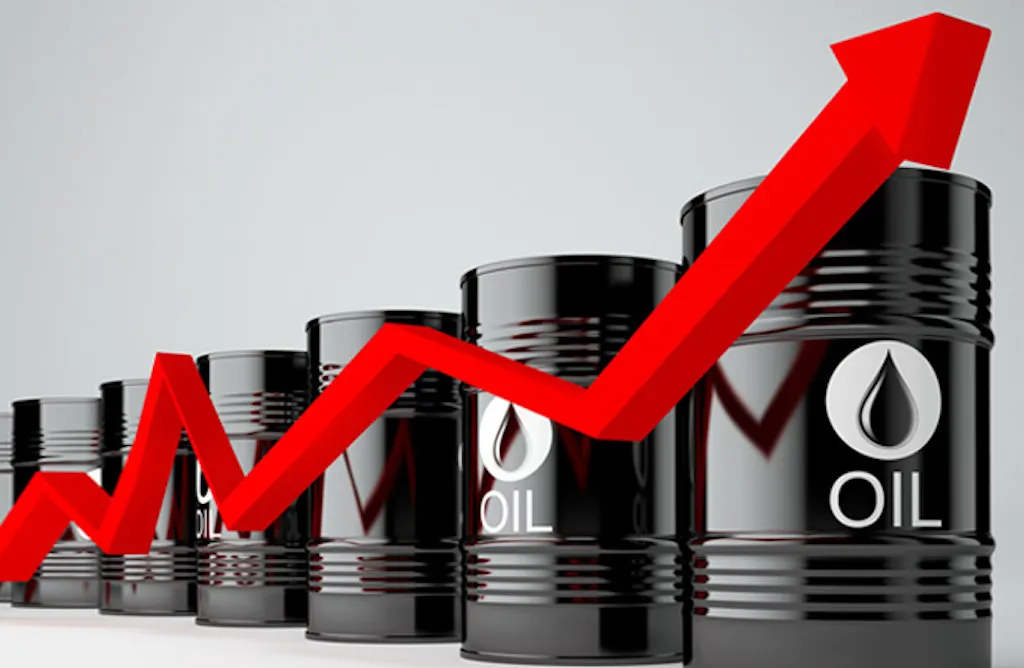
Global oil prices retreated on Monday following remarks from United States President Donald Trump, who hinted at a potential tariff reduction for China ahead of a diplomatic visit to South Korea.
The softening stance from Washington officials regarding trade tensions between the two largest economies also contributed to the downward trend in crude prices. Brent crude futures slipped 0.8% to trade at $60.69 per barrel, down from the previous close of $61.21. Similarly, the U.S. benchmark, West Texas Intermediate (WTI), declined by 0.9% to $56.67 per barrel compared to $57.20 in the prior session.
This marks the continuation of last week’s losses, as market participants weighed the implications of weakening global demand and a growing supply surplus on price stability.
According to the latest Oil Market Report by the International Energy Agency (IEA), global oil demand is projected to grow by only 710,000 barrels per day (bpd) in 2025, reaching 103.84 million bpd—slightly below its previous forecast.
The agency attributed the downward revision to slower global economic growth and rapid advancements in electrification, both of which are curbing oil consumption. On the supply front, the IEA highlighted a widening global surplus, citing increased production from OPEC+ members and the United States as key drivers behind the recent price weakness.
Daniel Hynes, senior commodity strategist at the Australia and New Zealand Banking Group, noted that the uncertain trajectory of U.S.-China trade relations continues to cloud demand expectations. “The outlook for demand is complicated by the on-again, off-again trade tensions between the U.S. and China,” he said.
During a press briefing in Washington, President Trump stated that China had paid a “tremendous amount of money” in tariffs to the United States, but hinted at the possibility of easing some of the levies if Beijing made fresh trade concessions.
“We have a very good relationship with President Xi of China,” Trump told reporters. “They’re paying us a lot of money in tariffs—tremendous amounts. They’d probably like to have it be less, and we’ll work on that. But they have to give us something in return.”
Trump added that China currently faces record tariff levels, including a 20% duty on fentanyl-related imports and cumulative tariffs of up to 157% on select goods. However, he emphasized his willingness to consider reductions if progress is made during upcoming negotiations.
“I want to help China, not hurt China, but it can’t be a one-way street,” he said.
In another development, the U.S. president disclosed that Indian Prime Minister Narendra Modi had assured him that New Delhi would stop purchasing Russian crude oil. Trump warned that India could otherwise face steep tariffs, reiterating Washington’s opposition to Moscow’s energy exports.
Since 2022, India has emerged as one of Russia’s largest oil buyers, capitalizing on discounted crude prices amid Western sanctions.
Meanwhile, European Union energy ministers are meeting in Luxembourg this week to finalize a collective strategy aimed at phasing out Russian gas imports, a move expected to significantly alter Europe’s energy landscape.
In the U.S., oilfield services firm Baker Hughes reported that the number of active oil rigs remained unchanged at 418 for the week ending October 17. The data shows that the country’s oil rig count has fallen by 64 units compared to the same period last year, underscoring slowing drilling activity despite stable production levels.
With global inventories rising and demand growth softening, analysts anticipate that oil prices may remain under pressure in the near term as markets await clarity on trade talks and the next steps in U.S.-China relations.