








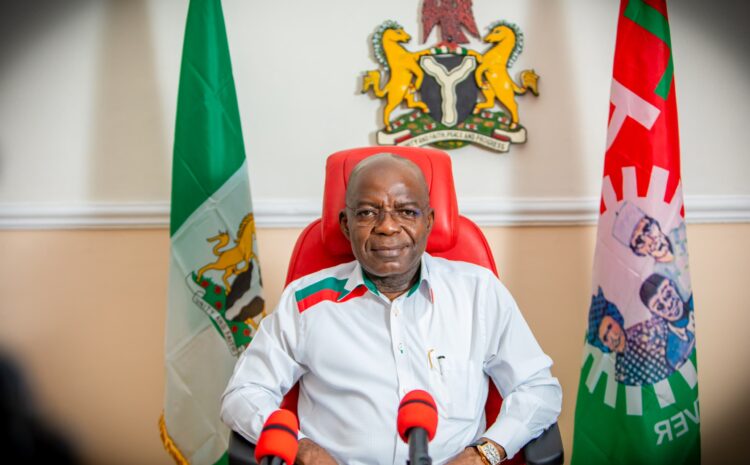
The Federal Government, in partnership with the African Development Bank (AfDB), Islamic Development Bank, and Abia State Government, has launched a $263.8 million Integrated Infrastructure Development Project aimed at transforming urban infrastructure in the state.
According to the AfDB, the initiative seeks to modernize transport systems, strengthen erosion control, and improve waste management in the rapidly growing cities of Umuahia and Aba. The project is designed to promote inclusive, climate-resilient development while boosting economic productivity and public health.
The financing structure includes $115 million from the AfDB—comprising $100 million from its ADB window and $15 million from the Canada-AfDB Climate Fund—while the Islamic Development Bank is contributing $125 million. The Federal Government is providing counterpart funding of $23.8 million.
A key feature of the project is the rehabilitation of over 248 kilometers of urban roads, restoration of two major erosion sites, and the establishment of public-private partnerships to drive investment in solid waste management. It is expected to create more than 3,000 temporary jobs during construction, with 30 percent allocated to women, and about 1,000 permanent roles during operations—half of which will be reserved for young people through a state-led skills development program.
Abia State Governor, Alex Otti, described the initiative as a defining moment in the state’s infrastructure renewal agenda. “We are focused on raising living standards, improving access to education and healthcare, and driving economic growth. Investor confidence is growing, and Abia is emerging as a hub for opportunity and impact,” Otti said.
Dr Abdul Kamara, Director-General of AfDB’s Nigeria Country Department, emphasized that the project goes beyond physical infrastructure. “This is about improving lives—reducing travel time by half, enhancing incomes, expanding access to schools and hospitals, and creating space for entrepreneurs, especially women and youth, to thrive,” he noted.
The project also incorporates social and environmental safeguards, including training for women and youth entrepreneurs, HIV/AIDS awareness campaigns, resettlement support, and improved financial management systems.Dr Abdul Kamara, Director-General of AfDB’s Nigeria Country Department, emphasized that the project goes beyond physical infrastructure. “This is about improving lives—reducing travel time by half, enhancing incomes, expanding access to schools and hospitals, and creating space for entrepreneurs, especially women and youth, to thrive,” he noted.
The project also incorporates social and environmental safeguards, including training for women and youth entrepreneurs, HIV/AIDS awareness campaigns, resettlement support, and improved financial management systems.



, Islamic Development Bank, and Abia State....)