The Federal Government has been advised to go through with the planned privatization of four airports in the country.
The airports penned down for privatization are, the Murtala Muhammed Airport, MMA, Lagos, Nnamdi Azikiwe Airport, NAA, Abuja, the Port Harcourt Airport and Aminu Kano Airport, Kano.
Giving the advice last weekend in Lagos, the former General Secretary of Airline Operators of Nigeria, AON, Muhammed Tukur, said that privatisation of the airports would bring more vibrancy to them.
He stated that the Murtala Muhammed Airport Two, MMA2, managed by the Bi-Courtney Aviation Services Limited, BASL, remained the best terminal in the country because it is being managed by a private investor.
The former past Managing Director of the Skyway Aviation Handling Company Limited, SAHCOL, Oluropo Owolabi has held the Nigerian Civil Aviation Authority, NCAA, responsible for the bad treatment Nigerian airlines and the two ground handling companies in the sector receive in the hands of foreign carriers.
The aviation expert specifically said that the regulatory body approved different tariffs for it and the Nigerian Aviation Handling Company, NAHCO, Plc, a situation, which he said was negatively affecting the economy of the country.
Owolabi stressed that this practice had made the foreign carriers to take the ground handling companies for a ride while capital flight increases, stressing that SAHCOL had made attempts in the past to ensure that NCAA called the two ground handlers together for a meeting, but all to no avail.
He explained that despite the fact that foreign carriers increased airfares arbitrarily, ground handling companies were not allowed to do this and called on NCAA to address the issue before it got out of hand.
“I see no reason why NCAA should approve NACHO for a tariff separately. It is a tripartite agreement. I expected NCAA to call us together. By and large, if you look at it, it is the foreign exchange we are losing. Tickets fares are raised every time by the foreign airlines yet they don’t want you to increase your tariff. If you try to do so they threaten that they would go to other handler.
The National Cashew Association of Nigeria, NCAN, is targeting about N80 billion from cashew export tin 2016 , its spokesman, Sotonye Anga, has said.
Anga told News Agency of Nigeria (NAN) on the sideline of the ‘Second Annual Cashew Logistics Meeting’ in Lagos that shipping lines had recognised cashew as revenue generating cash crop and contributor to the country’s economy.
Noting that shipping firms account for more than 80 per cent of exported cargoes from Nigeria, he said: “There is need for improvement in the handling of cashew, which will propel significant improvement in the country’s economic performance.
“Shipping lines have recognised the economic relevance of cashew and that is why you can see their chief executives and decision makers represented at this meeting. “The meeting will afford the association opportunity to take steps to advance Nigeria’s cashew export to destinations like India, Vietnam, China, Middle East, Europe, U.S. and others.”
The NCAN spokesman, who said the association believed in strong bond between it and the shipping lines, stated that “We expect that Nigeria should generate about N80 billion from cashew export in 2016 season and trade in a manner that will impact on the value chain.”
He said NCAN would leverage on this relationship to ensure that the year cashew exports is hitch-free.
“We will have zero claims because of damages to cashew cargo when containers are well dressed with adequate number of desiccants and Kraft papers,” he said.
One of the world’s largest social networking platform, Twitter Inc shares plunged below their $26 initial public offering price, down almost two-thirds from a peak soon after the stock began trading.
The selloff was triggered three weeks ago, when Jack Dorsey, co-founder and interim chief executive officer, warned that it would take a while before Twitter is able to reverse a slowdown in user growth.
While his candor was hailed by analysts, investors appear to have taken his comments — which also described product performance as “unacceptable” — to heart.
The board’s search for a new CEO, and uncertainty over whether Dorsey is in contention for the job, also have weighed on the shares. At stake is whether Twitter — used by 316 million monthly users posting and sharing 140-character messages — can become a mainstream platform instead of a niche forum favored by journalists and celebrities.
Bloomberg reported that Twitter was down 5.9 percent at $25.97 on Thursday amid a general market selloff. The company’s shares have declined about 28 percent so far this year.
At the time of Twitter’s November 2013 IPO, the company was heralded as a high-growth stock with the potential to be the next Facebook Inc. Yet the San Francisco-based company has failed to grow as fast as expected. Twitter has endured months of pressure over the user numbers, tweaking its features and shuffling its product and engineering leadership, without much progress.
Further share declines could add pressure on Twitter to seek a takeover, or complete its search for a CEO. Dorsey also runs Square Inc., which he couldn’t leave without straining the payment company’s planned IPO, people familiar with the matter have said.
The financial services industry spent $114 billion worldwide on mobility, cloud, and big data and analytics (BDA) technologies out of a total worldwide financial services information technology (IT) spend of $455 billion.
A new IDC Financial Insights Perspective entitled ‘Worldwide Financial Services 3rd Platform IT Spend 2014-2019 – Opportunities Abound’, said financial institutions spent more than 25 per cent of their IT budgets on just these three transformative technologies in 2015. According to the report, this will increase to almost 30 per cent by 2019.
Karen Massey, Senior Research Analyst, IDC Financial Insights said: “The advance of the 3rd Platform and its four pillars – mobility, cloud, big data and analytics (BDA), and social business – has caused a fundamental shift in how financial services companies are consuming and budgeting for IT and applications. Furthermore, the 3rd Platform is creating the most significant opportunities for financial institutions in decades.”
She noted that “Financial institutions are increasingly leveraging these four pillars to transform their businesses, with a keen focus on three of the pillars – mobility, cloud and BDA.” The new Perspective includes topline IT forecasts for mobile, cloud, and BDA, banking, insurance, and capital markets and U.S. and rest of world, totaling a worldwide forecast.
Indications have emerged that the Nigerian auto industry in 2016 will see a burst of Chinese automobile brands in the country as more players tag along with the National Automotive Industry Development Plan (NAIDP).
Stallion’s daughter automobile manufacturing company, Zahav Automobile Company Nigeria Limited, with plants in Ikotun, Lagos, is the local assembler of Foton Tunland pickup, the Changan and BAIC models, as well as the indigenous Stallion Force pickup.
Already, the company is positioning the Foton Tunland and Stallion Force pickups to give the likes of Hilux, L200 and other competitors a run for their money in 2016. The Chinese brand also has the CS2 Foton passenger bus assembled at the Ikotun plant, which is poised to take off a huge market chunk from Toyota’s Hiace and the likes.
A sizeable number of sedan and sports utility vehicles (SUV) models are coming off from the Zahav plants this year. They include the Changan models- CS35 an SUV, the Changan Eado, a city sedan and the BAIC models which are majorly the D-series, all being assembled in Nigeria.
Stallion has urged emerging businesses and astute commercial ventures not to wander afar in search for functional and reasonably priced pickup trucks as it unveiled the all new “drive beyond borders” Foton Tunland pickup and of course the Stallion Force, both of which are all-wheels drive.
Zahav’s head of sales and marketing, Mr. Sanjay Rupani said Foton Tunland pickup was introduced to assuage some of the challenges small businesses and commercial ventures contend with when prospecting for functional and adaptable vehicle to support their businesses.
“The next generation Foton Tunland pickup would compete in the one tone vehicle segment where renowned brands like Toyota Hilux, Nissan NP300, Ford Ranger and Mitsubishi L200 have demonstrated utter competence,” Rupani assured.
Coming in relatively very cheap, these Chinese vehicles essentially share the DNA of two renowned automobile manufacturers – Daimler Automotive Company, maker of Mercedes, and Cummins Engine Company, as the Chinese automakers, Changan Motors and Beijing Automotive Industry Holding Company Ltd (BAIC) are in technical partnership with these global automobile names to enhance a globally accepted quality.
Also, leading distributor of Toyota in Nigeria, Elizade Motors Limited plans to begin assemblage of the JAC brand, a Chinese brand also at its Ikotun plant in Lagos by 2nd quarter of 2016.
According to experts, financial authorities are facing increasing pressure to further devalue the naira as the price of oil, its biggest source of foreign exchange, trades at the lowest level since 2004.
Alan Cameron, London-based economist at Exotix Partners LLP, said in a research note, that the Central Bank of Nigeria, CBN, may revise its target for the naira by about 20 per cent to N240 to N250 per dollar as oil continues its decline, .
The currency was little changed at N199.29 per dollar on Thursday, January 7, in Lagos, the commercial nerve centre.
“Cumbersome foreign-exchange restrictions are strangling economic growth,’’ John Ashbourne, London-based Africa economist at Capital Economics, said in note to clients on Wednesday. “The authorities will be forced to devalue the naira in the first half of 2016.”
Nigeria needs more flexibility in setting monetary policy so it can use its foreign-currency reserves to support the poor population, International Monetary Fund managing director Christine Lagarde told Nigerian President Muhammadu Buhari on Tuesday.
The central bank has held the naira at N197 to N199 per dollar since March as Governor Godwin Emefiele introduced trading curbs to conserve reserves and stem a rout after it fell to a record N206.32 in February.
Nigeria, with more than 170 million people, is struggling to cope with crude prices that have fallen almost 70 per cent since their peak in June last year to below $40 a barrel. Brent crude for February delivery tumbled 3.4 per cent to $33.07 by 7:15 a.m. in London.
“The need for a devaluation of the naira has been obvious for some time, all the more so after the latest drop in oil prices,” Cameron said.
The African Development Bank, AfDB, has announced that it would spend about $300 million on the ‘Enable Youth Empowerment Agribusiness Programme.
The project is to be implemented in partnership with the Federal Ministry of Agriculture and Rural Development within 18 months.
The bank’s Director, Agricultural and Agro- Allied Industries, Chudi Ojukwu, said the three-year project would enable training and funding of young graduates, who are interested in farming across the country.
The programme is expected to encourage youths into agriculture, thereby increasing food sufficiency, reducing unemployment with each recipient to benefit to the tune $75, 000.
In a statement on Thursday, January 7, the Agriculture Minister, Chief Audu Ogbeh, said the project would commence from the three Federal Universities of Agriculture in the country. According to the release by the Director of Information, Tony Ohaeri, Dgbe said “a total of $300 million would be accessed to cover the three year project which would bring young graduates together and train them for 18 months as entrepreneur farmers.
“The initiative would create 250,000 jobs; the beneficiaries would be trained at various incubation centres on all aspects of value chains, with each beneficiary supported with about $75,000. The project would cover the 36 states including the FCT, while the Agricultural Aransformation Agenda (ATA) would be expanded through the processing zones.”
Trading on the Nigerian Stock Exchange, NSE, traveled north for the first time on Thursday, January 7, after the market opened the year with three days consecutive loss.
The All Share Index leaped by 0.31 per cent to close at 27,266.18 points from 27,180.76 on Wednesday while market capitalization also soared from N9.348 trillion to N9.377 trillion.
Etranzact led the gainer table of six stocks with the highest gain of N0.15 gain or 4.93 per cent to N3.19 followed by Okomu Oil with a gain of N1.52 or 4.83 per cent to close at N33 followed by Dangote Cement that gained N6.55 or 4.27 per cent to close at N159.98 per share.
On the other hand, Skye Bank topped 30 stocks on the losers’ chart with N0.12 loss or 8.82 per cent to close at N1.24 followed by Unity Bank that lost 0.09 or 8.82 per cent to close at N0.93 per share, and FCMB that lost N0.08 or 5 per cent to close at N1.52 per share.
All together, a total of 166,390,459 shares worth N1.658 billion exchange hands in 2,917 deals.
The Central Bank of Nigeria, CBN, has sold N136.24 billion in Treasury Bills with maturities from three months to one year at its first auction of 2016.
T-bills are marketable money market securities used to raise money for the government and also help in monetary policy management of the Central Bank. T-bills are short-term.
The auction, held on Wednesday, JAnuary 6was at higher yields than previously, the central bank said on on Thursday, January 7.
The apex bank sold N55.4 billion of three-month paper at four per cent, up from 3.62 per cent at a sale on December 23.
It also sold 25 billion naira of six-month debt at 6.99 percent against 6.19 percent, and 55.84 billion naira of one-year paper at 8.05 percent compared with 7.45 per cent.
Total demand stood at N311.5 billion compared with N226.97 billion last time.
The main investors in government securities are mainly pension funds and commercial banks which control more than 60 per cent of the market, followed by insurance funds and a few micro-finance institutions.
Oil price slid below $33 a barrel, on Thursday, January 7, for the first time since April 2004 as a slide in Chinese shares rattled investors already concerned by near-record production and massive stockpiles of unwanted crude and refined products.
Oil prices have plunged by about 70 per cent since mid-2014, hurting oil companies and governments that rely on crude revenue.
China allowed its yuan currency to slip yesterday, sending regional currencies and stock markets globally tumbling. The offshore yuan fell to its lowest since trading started in 2010.
China’s stock markets were suspended less than half an hour after opening on Thursday after sharp falls triggered a new circuit-breaking mechanism for a second time since its introduction this week.
“Negative sentiment is hurting demand expectations, growth is easing in China and there is a spillover from the inventory build in (U.S.) gasoline stocks from yesterday and this is reflected in prices,” said Hans van Cleef, senior energy economist at ABN Amro in Amsterdam.
Brent fell more than 5 percent in early European trade to a low of $32.16 before trimming some of its losses. It was down 1.6 percent at $33.70 at 1439 GMT.
U.S. crude futures hit a low of $32.10, their lowest since late 2003, before bouncing slightly to $33.32.
Prices trimmed early losses, with violence in the Middle East and north Africa offering a measure of support for the market.
Sterling Bank Plc posted modest growths in the first half with 12 per cent growth in the top-line and 6.9 per cent increase in net profit.
Key extracts of the interim report and accounts for the half year ended June 30, 2015 released on Thursday, January 7, at the Nigerian Stock Exchange (NSE) showed steady growth in key performance indices, underlining the resilience of the bank against inclement operating environment and regulatory headwinds.
Gross earnings leaped by 12 per cent to N55 billion in first half of 2015 as against N49.39 billion in corresponding period of 2014.
The top-line was driven by a 32.2 per cent increase in non-interest income to N15.2 billion from N11.4 billion reported in the corresponding period of 2014.
Profit before tax inched up by 1.43 per cent from N5.97 billion to N6.06 billion. Profit after tax rose by 6.9 per cent to N5.4 billion in first half 2015 as against N5.1 billion in comparable period of 2014.
Further analysis showed that operating expenses was relatively flat at N24.2 billion leading to an improvement in cost –to-income ratio.
The bank’s balance sheet also came in stronger with shareholders’ funds increasing by 4.4 per cent to N88.4 billion as against N84.7 billion in 2014.
Total assets , excluding contingent liabilities, increased by 1.2 per cent to N834.0 billion as against N824.5 billion in 2014.
Access Bank Plc on Thursday, January 7, released its half-year earnings report on the Nigerian Stock Exchange, showing impressive growths across key fundamentals.
On the strength of the six-month earnings, which saw 43 per cent growth in gross earnings and 39 per cent in profit after tax, the board of the bank has recommended distribution of N5.72 billion as interim dividend to shareholders.
The breakdown of the dividend recommendation indicated that shareholders on the register of the bank as at the close of business on September 3, 2015 would receive a dividend per share of 25 kobo.
More than 830,000 shareholders would benefit from the interim dividend, which becomes payable on September 10, 2 105.
Against the average decline of 0.98 per cent, Access Bank’s share price rose by 4.91 per cent, the fourth highest percentage gain, to close at N4.29 as the news made the round at the Nigerian Stock Exchange (NSE).
Key extracts of the audited report for the six-month ended June 30, 2015 showed that gross earnings rose by 43 per cent to N168.3 billion in first half 2015 as against N117.9 billion recorded in comparable period of 2014.
The top-line was buoyed by an 18 per cent increase in interest income to N98.9 billion in the first half of 2015 compared with N83.6 billion in the comparable period of 2014.
Group profit before tax leapt by 44 per cent to N39.1 billion as against N27.1 billion in previous year while profit after tax grew by 39 per cent to N31.3 billion in first half 2015 compared with N22.6 billion in first half 2014.
Non-interest income had risen by 101 per cent to N69.4 billion in first half 2015 as against N34.6 billion in first half 2014. Return on average equity improved to 21.6 per cent in first half 2015 from 16.5 per cent in 2014.
In recent times, more Nigerians visit different locations across the world every year on vacation and it’s no wonder. The very idea of a vacation conjures up images of white sand beaches, clear, blue water, and sunny weather. A major advantage of travelling to international destinations or visiting new places is the opportunity to glean something fresh with each occasion.
Whether you are new to the travel or are a tried-and-true traveling professional in Nigeria, there are certain things you need to know to ensure you have the ultimate travel experience wherever you go.
Jovago.com, Africa’s No.1 online hotel booking portal put together this checklist of 4 things every traveller in Nigeria should know to ensure their time on the road is as enjoyable and stress-free as possible.
Learn the exchange rate for Naira
Although the Naira is the primary currency for trade in Nigeria, it is not a global legal tender in other parts of the world. Every Nigerian traveller should have at least knowledge of what the Naira exchange rate is for the currency used in each location they are visiting. This helps them regulate their budget and maintain a level of check and balances while spending abroad.
Master apps which make travelling easier
This is 2016 and being tech savvy is no longer an embellishment but a vital necessity. There are so many apps available to help you score new locations. From figuring out the direction to your hotel to learning how to connect to free Wifi and discovering native restaurants, these apps are life savers.
Know your passport number by heart
The passport is a vital document and is essential to travellers. Not only is it a mode of identification, it is also a form of authentication. It is important to know your passport number by heart in case you need to fill out a form and do not have your passport handy or worse; it gets missing or stolen.
Learn how to contact the Nigerian Embassy wherever you go
Most Nigerians take this for granted, as they do not know the role of the Nigerian embassy. The few who do are those who have had issues and needed the immunity or coverage of this organisation. When travelling, do not just pick out a destination and go, try to figure out which area the Nigerian embassy is located and if possible, pay a courtesy visit.
Acting chairman of the Economic and Financial Crimes Commission (EFCC), Mr Ibrahim Magu, has vowed to arrest and prosecute Bureau De Change operators involved in the ongoing $2.1 billion arms deal probe.
This was made known in a statement by EFCC spokesman Wilson Uwujaren in Abuja, following a visit by a delegation of Bureau De Change operators to the EFCC chairman’s office .
“Information reaching me through my operatives during investigations necessitated the need to talk to you.
“Some of your operators are fond of carrying huge amounts of money out of the country, since they can no longer withdraw more than 300 dollars using the ATM.
“There are fraudulent involvements of Bureau De Change operators in the arms deal scandal,” the statement quoted Magu as saying.
The statement said that reports available to the commission showed that some of the operators withdrew as much as N500 million in two, three, four tranches in this arms deal scam.
“I am greatly disturbed and I think there will be need for proper documentation of your activities.
“This will enable your group to checkmate anyone who is involved in any fraudulent activity,” the statement added.
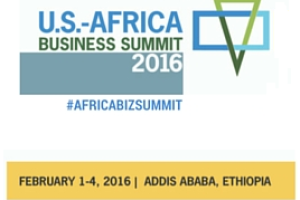
Top Nigerian business leaders will participate in the Corporate Council on Africa (CCA)’s US-Africa Business Summit in Addis Ababa, Ethiopia on February 1-4, 2016.
In a statement signed by Mr Ridwan Sorunke for CCA, he said, “The Summit will bring together more than 1,000 private sector and government representatives, including heads of state, from all parts of Africa, the United States, Europe, Asia and the Middle East. This year’s Summit will feature insightful plenary sessions, sector-focused panels, country-specific forums, peer-to-peer roundtables, site visits, exhibitions and networking opportunities.”
He said confirmed speakers for the summit include, Peter Amangbo, CEO of Zenith Bank, Austin Avuru, CEO of Seplat Petroleum and Ndidi Nwuneli, Founder and CEO, AACE Foods. CCA, the premier American organization devoted to U.S.-Africa business relations, will hold its 10th Biennial U.S.-Africa Business Summit for the first time in Africa, since 2007 at the United Nations Conference Centre in Addis.
He stated that President Muhammadu Buhari, along with several members of the Federal Executive Cabinet, have been invited to attend the summit.
‘’The Summit, which will be attended by other African heads of state including the Prime Minister of Ethiopia, Hailemariam Desalgn and Liberian President, Ellen Johnson Sirleaf, and senior government representatives from across Africa, will immediately follow the African Union’s Annual Heads of State Summit in Addis Ababa.
The Lagos State Government has cancelled operations of the first BRT cooperative run by the National Union of Road Transport Workers from the Mile12 to CMS BRT corridor with immediate effect.
This is contained in a statement signed by the state’s Commissioner for Transportation, Dr. Dayo Mobereola, on Thursday in Lagos.
“The termination of the franchise agreement with the operator is sequel to breaches of the BRT operations Service Level Agreement it signed with the state government, despite years of discussions and engagement to ensure SLA was adhered to.
“Though the SLA requires a one month notice prior to its termination, the Lagos Metropolitan Area Transport Authority, custodian of the agreement, had indeed given a three-month notice which the operator failed to honour,” he said.
Mobereola said the decision was premised on the inability of the operator to offer good public transport services to commuters on the all-important BRT corridor, he added that commutters also did not stop complaining about the poor service they rendered.
A Federal High Court in Abuja on Thursday granted bail to the former Chairman of the Peoples Democratic Party, Haliru Bello, and his son, Abba Bello, in the sum of N300m each with two sureties in like sum.
Justice Ahmed Mohammed in a ruling on the accused persons’ bail applications also ordered that they should deposit their passport with the court pending the determination of their trial.
The judge also ruled that one of the sureties that Bello should produce must be a director in the service of the Federal Government or any of its agencies.He ruled that the other surety must own property in Abuja worth the N300m bail sum.
With respect to the son’s bail, Justice Ahmed ruled that one of his sureties must be a federal civil servant not less that Grade Level 12 and the other must also own property worth N300m in the Federal Capital Territory.
The judge ruled that the title documents of the property to be presented by the sureties would be verified by court officials and surrendered to the court throughout the period the trial would last.
The court fixed February 16 for commencement of trial.
The Federal Government has said that the clean-up of Ogoniland affected by oil spill would commence in the first quarter of 2016.
Dr Peter Idabor, the Director General of the National Oil Spill Detection and Response Agency (NOSDRA), stated this on Thursday in Abuja in an interview with the News Agency of Nigeria (NAN).
Idabor said that the clean-up would be undertaken by the Federal Ministry of Environment, adding that the ministry was currently meeting with all relevant stakeholders.
It will be recalled that in 2015, President Muhammadu Buhari directed actions to fast track the implementation of the United Nations Environmental Programme (UNEP) report on environmental restoration of Ogoniland.
The actions were approved by the President based on recommendations made to him by the Executive Director of UNEP, Achim Steiner and other stakeholders.
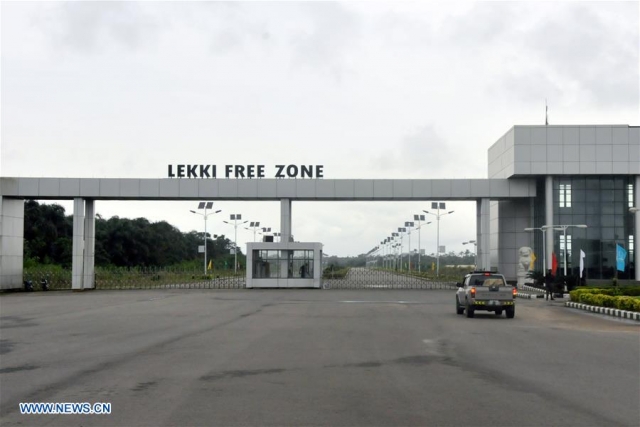
Chinese steel pipe manufacturer Jiangsu Yulong Group has broken ground for a major manufacturing plant in Nigeria’s Lagos Lekki free trade zone, aimed at supplying the country’s developing oil and gas industries.
China said the first of three investment phases in the Yulong Lekki project would be an estimated $50 million.
Yulong Group deputy general manager Willy Wen told China’s state Xinhua News Agency that the plant would become “the No.1 complex welding and seamless pipe manufacturer in Nigeria” as the group seeks to exploit new international markets.
Wen said the first phase of the project involved building a submerged arc welded pipe production unit with a design production capacity of 150,000 tonnes annually.
The second phase, at an estimated investment cost of around $60m, will see construction of “an advanced equipped steel pipe production unit” with a further annual production capacity of 150,000 tonnes, Wen said.
The third and final phase will see the group launch a $10m tubing, casing, drill pipe and line pipe production unit, Wen said.
According to Xinhua, China’s consul-general in Lagos Liu Kan said at the ground breaking ceremony, on 16 December, that the project “was an important part of China-Nigeria industrial cooperation which would bring win-win benefits”.
Xinhua said the project, which would cover an 180,000 square-metre site, was expected to create more than 1,000 jobs for Nigerians and “enhance modern technology transfer by training engineers in the steel fabrication business”.
On completion, the plant “will be one of the largest heavy industry plants in Nigeria”, Xinhua said.