Transactions on the Nigerian Stock Exchange, NSE, closed in the Red zone on Friday, January 8, as the All Share Index dropped by 0.87 per cent to close at 27,028.39 points from 27,266.18 on Thursday, January 7.
Similarly, market capitalization plunged from N9.377 trillion to N9.296 trillion.
Okomu Oil led the gainer table of seven stocks with the highest gain of N3.25 gain or 9.85 per cent to N36.25 followed by Dangote Sugar with a gain of N0.28 or 4.86 per cent to close at N6.04 followed by Ikeja Hotel that gained N0.15 or 4.81 per cent to close at N3.27 per share.
On the other hand, Honywell Flour topped 29 stocks on the losers’ chart with N0.17 loss or 8.95 per cent to close at N1.73 followed by Unity Bank that lost 0.08 or 8.60 per cent to close at N0.85 per share, and Flour Mill that lost N1.04 or 5 per cent to close at N19.76 per share.
All together, a total of 235,554,505 shares worth N1.938 billion exchange hands in 2,953 deals.
Nigeria’s external reserves have continued to slide hitting a 12-year low as it crossed the $29 billion mark to a 30-day moving average of $28.931 billion as at Friday January 8, 2016.
This brings the total decline of the reserves from the beginning of December 2015 to 3.17 per cent.
The reserves which was at $29.880 billion as at December 1, 2015 had dropped by 2.7 per cent within the month to $29.069 the last day of last year before a further shed of $138.668 million dollars between December 31, 2015 and January 7, 2016.
Having hovered around $30 billion since September last year, the reserves began a steady decline in December, crossing over to $29 billion which it maintained throughout the month before it hit $28 on January 4, 2016 which is the latest figure given by the Central Bank of Nigeria.
The external reserves had depreciated by 14.1 per cent last year having fallen from fallen from $34.46 billion which it was as at December 31, 2014 to $29.069 billion as at December 31, 2015 according to figures given by the Central Bank of Nigeria (CBN) on its website, covering barely four months of imports.
A source within the CBN explained that the decline was due to the fact that the level of inflow into the reserves was lower than the level of outflow during the 30-day period.
According to Olubunmi Asaolu of FBN Quest Research, the dropping level of the reserves also reflects the falling oil prices at the international market.
The Central Bank of Nigeria, CBN, may announce a new exchange rate band, with a floor of N185 and a ceiling of N220 in the first quarter of 2016 in an effort to bring the external and domestic economic variable into equilibrium.
Some analysts have expressed optimism that the apex bank may unveil the new band when the Monetary Policy Committee (MPC) meets in two weeks, at a time when there are mixed signals on the direction of monetary policy in Nigeria.
Bismarck Rewane, chief executive officer, Financial Derivatives Company (FDC) said interest rate will likely respond to the new band.
Money market rates are already at an all-time low.
“We expect to see a creeping up of rates as the level of government borrowing increases”, he said.
The anticipated tweak in the exchange rate band is expected to slowdown the rate of depletion,of the external reserves, already below $29 billion, as the demand pressure eases.
BUA Group has announced the divestment of its flour business to Olam International in a deal worth $275million.
Founder, BUA Group, Abdulsamad Rabiu, who spoke at the signing ceremony over the weekend, said: “This signing marks a major milestone in our medium term strategy. Over the years, we have run one of the largest and most efficient flour milling businesses in Nigeria and are confident in the value it will add to the buyer’s operations.”
“Our Group’s strategic focus will now be to diversify to business areas with greater potential for export where the sourcing and utilisation of foreign exchange is less and most of the materials needed for production can be sourced locally whilst also positioning our current line of Foods and Infrastructure businesses for market leadership.”
Further speaking on the Group’s medium term growth strategy, Alhaji Rabiu, who is also the executive chairman of BUA, said that expanding the backward integration of its sugar plantations in Kwara and Kogi States is key.
“Extensive work is ongoing in Lafiagi, Kwara State with over 20,000 hectares and we have another 50,000 hectares of farmland in Bassa, Kogi. These two operations form the fulcrum of our backward integration programme for sugar and this will further reduce the country’s dependence on imported raw sugar while supporting the value chain in sugar production within Nigeria
“Similarly, we expect to replicate the successes we have recorded through the deep integration of our cement operations.”
“With most raw materials for cement currently being sourced locally, we have been able to scale up operations significantly with minimal dependence on foreign exchange and will soon start exporting to neighbouring countries from both our Obu and Sokoto plants which are currently undergoing 3.5million MTPA and 1.5million MTPA capacity expansions respectively to bring the Group’s cement production capacity to around 10 million MTPA by 2018,” he added.
Indications have emerged that the National Assembly, NASS, may have discarded the nation’s automotive policy.
This assumption is coming as both the executive and the legislature unveiled plan to acquire various automobiles budgeted at a whopping N4.7 billion for the National Assembly and over N3.7 billion for principal officials of the federal government is implemented.
Findings by Leadership revealed that, of all the cars, sports utility vehicles (SUVs) and other logistics vehicles to be purchased by both the National Assembly and the presidency, none of them is from among the locally assembled models in the country, raising doubts on the support of the government to the celebrated national automotive policy.
While the Presidency voted the sum of N3.63 billion for BMW saloon cars for principal officers and another N189.1 million voted for tyres for various vehicles, including the bulletproof and plain Mercedes Benz cars being used in the Presidency in the 2016 budget, the Senate plans to spend its share of the total sum of N4.7 billion on Toyota Land Cruisers 2016 model for its 109 members. The senators also want their vehicles to come with integrated navigator cruise control, and QI-Compartible wireless charging and Kinetic dynamic suspension system.
The House of Representatives plans to buy two Mercedes Benz S550 2016 Model, with full option and bullet proof, as well as 14 Toyota Land Cruisers, 5.7L petrol engine, 2016 Model, with full option and keyless entry.
The identities of the choice cars for the members of the legislature were contained in an advertorial placed in one of the national dailies on November 13.
Other favored car brands and models include American brand, V8, VXR “with intelligence,” Peugeot 607 and 406 sedans, Prado jeeps, Hilux vans and other exotic Toyota models, broadly described as “utility and operational vehicles.” None of these are currently being assembled in Nigeria.
While Toyota, Mercedes and BMW cars are not being assembled in the country at the moment, PAN Nigeria has not commenced local manufacturing of Peugeot 607 and 406 models, suggesting the government and the NASS will have to source the vehicles from abroad, a rejection of the made-in-Nigeria brands and models.
Automobile industry investors and stakeholders who spoke on the matter lamented that the plan of the government to source the vehicles from outside the country, stressing that sourcing the automobiles from the local industry would save the country from huge capital flight that leads to severe loss of foreign exchange.
Transactions on the Nigerian Stock Exchange, NSE, kick started the year 2016 on negative note run as 190 equities listed declined by N555 billion during the first trading week of the year.
Index movement indicates that the NSE All-Share Index and market capitalization depreciated by 5.63 per cent to close the week at 27,028.39 and N9.296 trillion respectively.
Similarly, all other Indices finished lower during the week, with the exception of the NSE Industrial Goods Index that rose by 0.45 per cent to close at 2,176.44.
At the end of the week, a turnover of 899.604 million shares worth N7.669 billion in 14,164 deals were traded by investors on the floor of the exchange in contrast to a total of 2.965 billion shares valued at N9.364 billion that exchanged hands last week in 7,174 deals.
The Financial Services Industry (measured by volume) led the activity chart with 764.790 million shares valued at N4.858 billion traded in 8,904 deals; thus contributing 85.01 per cent and 63.34 per cent to the total equity turnover volume and value respectively.
The Conglomerates Industry followed with 40.164 million shares worth N100.471 million in 626 deals. The third place was occupied by the Consumer Goods Industry with a turnover of 40.006 million shares worth N1.707 billion in 2,116 deals.
Trading in the top three equities namely Access Bank Plc, Guaranty Trust Bank Plc and United Bank for Africa Plc.(measured by volume) accounted for 339.027 million shares worth N2.800 billion in 3,116 deals, contributing 37.69 per cent and 36.51 per cent to the total equity turnover volume and value respectively.
Day by day trading indicates that the year opens on the bears as local bourse losing 271.93 basis points to close at 28,370.32 points on the first trading day in 2016.
Consequently market capitalization lost N94 billion to settle at N9.757 trillion. In line with the direction of Monday trading sentiments, market activity measured by value and volume traded deceased. The value traded lost 81.5 per cent to settle at N700.5 million while the volume traded decreased to 99 million units respectively. Market breadth settled at a positive as 12 stocks appreciated in prices against 18 depreciations.
The Consumer Services sector started the week on a negative footing, as losses in Nigeria Breweries and Nestle Nigeria drove a negative 2.9 per cent return. Despite the gains of 1.8 per cent in Zenith Bank, the Financial Services sector also returned negative 0.4 per cent based on losses of 4.9 per cent and 0.7 per cent seen in FBN Holdings and Guaranty Trust Bank respectively. Oando’s 1.7 per cent gain contributed to the Oil and Gas sectors 0.1 per cent return. Regardless of the flat daily return in Dangote Cement, the Industrial Goods sector returned negative 0.1 per cent on the back of a 4 per cent decrease in Ashaka Cement share price.
As crude oil price continue to slide, global speculators are reported to be buying put options contracts that will only pay out if price drops to as low as $15 a barrel in 2017, the latest sign some investors expect an even deeper slump in energy prices.
The prices on Wednesday dipped below $35 per barrel for the first time since 2004, tumbling more than five percent as the row between Saudi Arabia and Iran made any cooperation between major exporters on cutting crude oil supply to the international market more unlikely.
The diplomatic rift between Saudi Arabia and Iran after the Saudi execution of a Shi’ite cleric, Nimr al-Nimris believed to have ended speculation that the Organisation of Petroleum Exporting Countries (OPEC) could agree to cut production to lift the price of oil.
Riyadh had called off diplomatic ties with Tehran over Iran’s response to the execution of the Saudi Shi’ite cleric, while the United Arab Emirates and Kuwait have backed Saudi Arabia in the diplomatic crisis that could deepen sectarian tension in the Arab world.
Bloomberg reported that the bearish wagers come as OPEC’s effective scrapping of output limits, Iran’s anticipated return to the market and the resilience of production from countries such as Russia raise the prospect of a prolonged global oil glut.
Head of Commodities Research at Goldman Sachs Group Inc, Mr. Jeffrey Currie was quoted as saying that the oversupply would continue into 2017, adding there is risk oil prices would fall to $20 a barrel to force production shutdowns if mild weather continues to damp demand.
The bearish outlook has prompted investors to buy put options , which give them the right to sell at a predetermined price and time at strike prices of $30, $25, $20 and even $15 a barrel, according to data from the New York Mercantile Exchange and the United States Depository Trust & Clearing Corp.
West Texas Intermediate (WTI), the United States benchmark, is currently trading at about $36 a barrel.
The data, which only covers options deals that have been put through the US exchange or cleared, is viewed as a proxy for the overall market and volumes have increased this week as oil plunged.
Investors can buy options contracts in the bilateral, over-the-counter market too. They have bought increasing volumes of put options that will pay out if the price of WTI drops to $20 to $30 a barrel next year, the data shows.
The Association of Electricity Distributors, ANED, has stated that the, CAPEX, allowed for electricity distribution companies (DISCOs) yearly was inadequate to meet the expected improvement in the nation’s power sector.
Executive Director, Sunday Olurotimi Oduntan, who stated this at a press conference in Lagos, advocated the need to exempt the Credit Advance Payment for Metering Implementation (CAPMI) from the limit placed on CAPEX, even as he expressed displeasure over the huge gap in the nation’s power sector funding over the years.
He said: “According to the power sector privatisation agreement, all the DISCOs can only invest an average of N50 billion in a year because of the present tariff structure,” he stated.
“But if the CAPMI is exempted from the CAPEX limit, our members can channel their investment into metering all the customers without affecting other intended investment in infrastructural development to boost power supply across their networks,” Oduntan added.
Chief Executive Officer, Benin Electricity Distribution Company (BEDC), Mrs Funke Osibodu, stated that DISCOs take the blame for every problem in the power sector because they directly interface with the power consumers.
“We don’t have control over generation and transmission. We are like collection agents for the entire power industry. Across the financial value chain in the Nigeria Electricity Supply Industry (NESI), we get just 25 per cent of the total collections,” she explained.
“Once we collect the billing from the customers, the generation companies (GENCOS) get 60 per cent, Transmission Company of Nigeria (TCN) gets 11 per cent… We are directed to meter all our customers within one year, but we are constrained by the limit of CAPEX that we can invest.
The Securities and Exchange Commission, SEC, has ordered suspended BGL Group and their sponsors to appear before the Administrative Proceedings Committee (APC) on February 3.
The capital market regulator said it has invited the BGL Group, which consists of BGL Securities, BGL Assets Management and their sponsors to appear before the APC.
SEC said the summons was prompted by the receipt of 10 new complaints, valued at over N2.9 billion, against the group between May 20 and November 10, 2015 from various investors.
The commission said the investors have alleged several violations of the Investments and Securities Act (2007), SEC Rules and Regulations as well as the Code of Conduct for Capital Market Operators, including performance of a capital market function without due registration, promoting and marketing products not registered by the commission.
Others allegation against BGL are failure/refusal to resolve clients’ complaints, failure to file statutory returns and furnishing the commission with false and misleading information.
Following the outrage that trailed the sale of NITEL/MTEL obsolete items, the National President of the Nigeria Association of Auctioneers, NAA, Aliyu Kiliya, has called on President Muhammadu Buhari to probe the sale of the former leading telecoms operator in the country.
Kiliya made the appeal in an open letter to the Vice President, Yemi Osinbajo and the Chairman Council of Propertisation, a copy of which was made available to reporters on Friday, January 8 in Bauchi.
“The National Association of Auctioneers (NAA) as stakeholders filed a case in Bauchi Federal High Court against the liquidator who was appointed by the Bureau for Public Enterprise (BPE).
“We feel disappointed by the way and manner NITEL and MTEL sale was carried out.
“The items were supposed to be sold by open and competitive bidding, instead of secret bidding,” Kiliya said.
He said the NAA is dismayed that despite the direction by the Federal High Court judge that status quo should be maintained, it was regretable that NETCOM Company Limited has taken over the disposal of all the items of NITEL/MTEL nationwide, contravening the order that was given by the court.
“In this regard we are appealing to your good office to as a matter of urgency to kindly stop immediately the selling of NITEL/MTEL as we believe that a lot of revenue is being looted that is why they are rushing to sell and if this is allowed to happen a lot of revenue will be lost,”he said.
At the beginning of year, a majority of Nigerians pick up their diaries to write down their vacation plans for Easter, summer or other periods when they intend to take their work-leave for the year and one of the most important factors they consider is the destination.
In recent times, the go-to for most people in Nigeria has included Ghana, Dubai, London, and other obvious cities. However, while they may have the time of their lives, visiting these places more than once takes out the fun and makes the journey boring. And these trips almost always bring about major pocketbook damage.
This 2016, Jovago.com, Africa’s No. 1 online hotel booking site has made a list of top 5 best value destinations for Nigerians. These destinations are not only be novel for most travellers, they are wallet-friendly and offer adventure and stunning scenery. From high style and budget shopping to breathe-taking art, unique cultures and cuisines, read on to discover these places.
Tallinn, Estonia
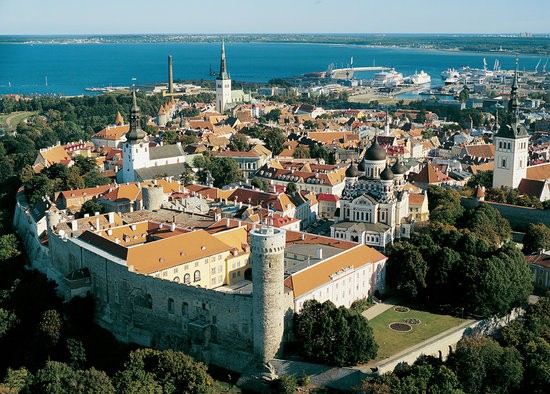
Estonia is a major destination on a lot of lists (including Lonely planet, Forbes and CNN) as best value for 2016. Found in Northern Europe, it is often described as one of the most wired countries in the continent. Tallinn, the largest city in the state is cheap by most standards and a popular getaway. Food, drinks and nightlife are quite affordable compared to other European cities and visitors also have a lot to see: thepreserved Old Town in the capital of Tallinn which boasts of rich history, the enchanting forests of Lahemaa National Park, and other sites.
Kampala, Uganda
Kampala, one of the favorite cities in Uganda, actually beats any other East African capital. While it is not as clean as Kigali, or as globalized as Nairobi, it is a dynamic and engaging city that features worthy attractions enough to keep you occupied for the duration of your vacation. With swanky restaurants and bars around the city, budget lodges and a bustling nightlife, you are bound to get the best value in this city.
Galicia, Spain
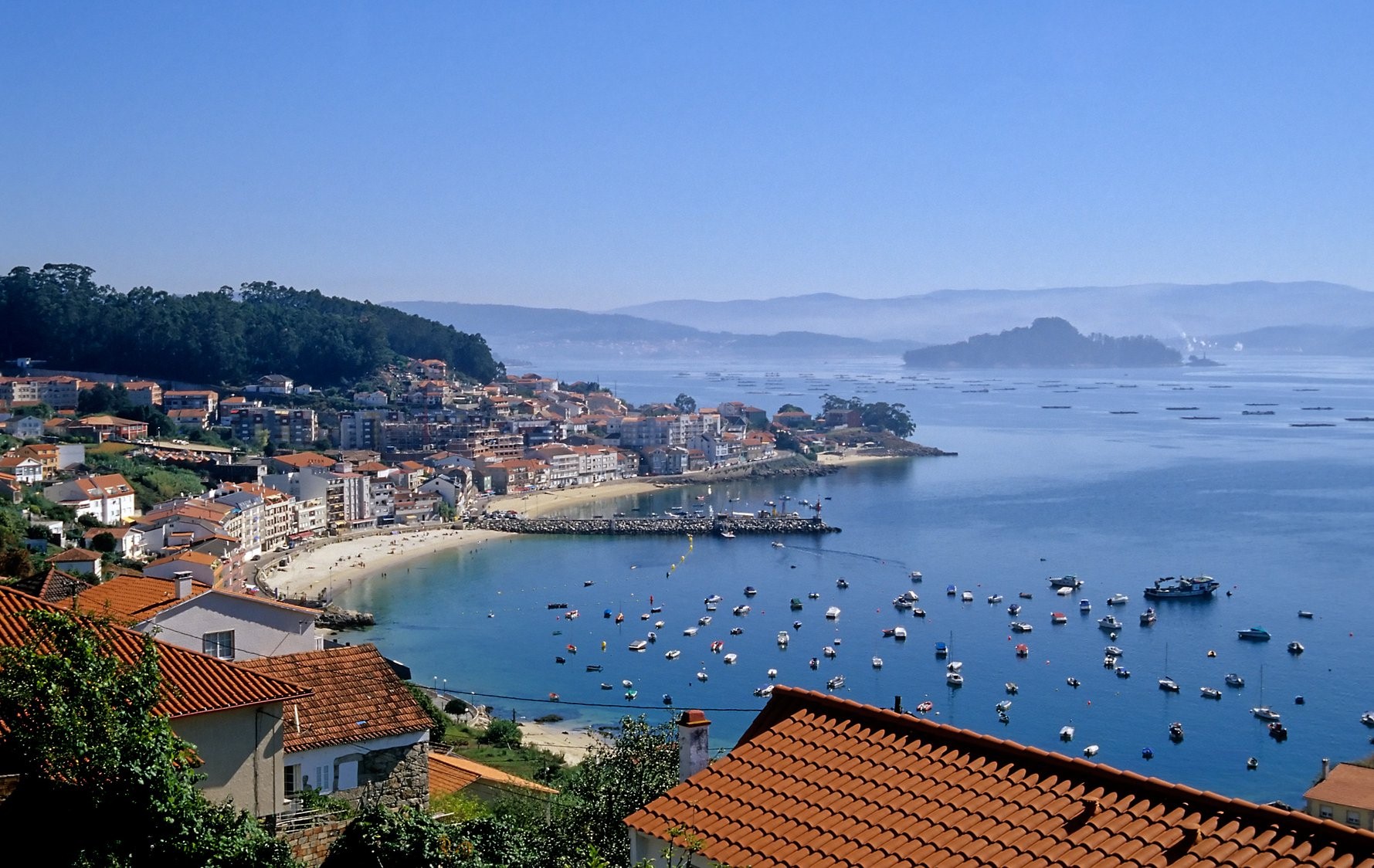
The usual destinations for Nigerians visiting in Spain include Ibiza, Barcelona and Madrid, however, Galicia, located in the northwest region of the country offers a rocky coastline and communities barely explored by tourists. Nigerians who love to discover new places will definitely get the best experience in this area. The food- including meat, cheese and seafood- is affordable and can be found in the many restaurants and bars throughout the region. Hostels and apartments are also available accommodations for budget travellers.
Goa, India
Most Nigerians tend to think of India as the place to go to when you have a medical emergency or health problem, however, the country is much more than that. While large cities like Mumbai and Delhi might not be of such great value (budget-wise), Goa a small state in the country offers a great travel bargain. Its collection of beach and inland towns offer enough motivation to hang around. The state also offers the cheapest hotels and a variety of gastronomies for Indian food lovers.
From mountains, hills and caves to seasides and natural springs, the Western region of Nigeria which covers states such as Lagos, Ogun and Ekiti offers a variety of marvelous destinations for adventure seekers.
Although not as naturally endowed as the northern regions of the country in terms of landscape, and inhabited mostly by the Yoruba tribe, indigenes from other tribes as well as tourists from other countries visit the region regularly to seek adventure or test their survival skills.
Visiting western Nigeria and getting bored already? Swap the ‘sightseeing’ for something more extreme. In many survival situations it is up to you to save yourself, so, Jovago.com, Africa’s No.1 online hotel booking site has picked out 4 places that will offer you opportunities to learn how to do just that.
Idanre Hills
While Idanre Hill looks like an easy climb, it really is not. Listed as a World Heritage Site by the United Nations Educational Scientific and Cultural Organization (UNESCO) it attracts a lot of adventure seekers from around the world. Featuring a cluster of intimidating and imposing hills with abundant the flora and fauna you already have a lot on your plate. Fortunately, you are free to camp on this site for a while , and this gives you opportunity to gain a lot of survival skills from Navigation, signaling, knot tying, first aid and basic fire-starting.
Ikogosi Warm Spring
Located at Ikogosi in Ekiti State, the spring flows warm water from a rock. Flowing abreast the warm spring is another cold spring which meets the warm spring at a confluence, each maintaining its thermal properties. A wooden foot bridge leads to the source of the cold and warm spring water, and research suggests that the warm spring has a temperature of about 70C at the source and 37C at the confluence. Visiting the spring requires a lot of trekking and exploration on the part of the visitor, as the vegetation at the spring can be considered a highly thick forest. The location tests you in many ways
Olumo Rock
A pillar that dates back to ancient Yoruba folklore, Olumo rock is one of the best places to test your survival skills while visiting the Western region of Nigeria. Aside from the intriguing mystery of the serpent, Olumo Rock which stands at 137metres from its base, makes for an exhilarating climb. The heavy duty escalator and a glass elevator running the different levels of the rock alongside the old stairway are a pleasure to those who love climbing. Generally, it gives your opportunity to test your stamina and build endurance. Also, the caves feed your curiosity and even bring a rush of adrenalin.
IITA Forest Ibadan
One of few natural forest reserves in Western Nigeria, the IITA Forest is a huge part of the renowned International Institute of Tropical Agriculture’s Natural Resource Management, and it is located at Ibadan, Oyo State. Covering an area of more than 300 hectares, the forest reserve provides habitat to quite a number of rare and endangered migrating birds and small animals. The IITA Forest Project organizes the event ‘walks on the wild side’, which is open to the general public. The activities in this event are particularly suited to visitors looking test their survival skills.
The Director of the Department of Petroleum Resources, Mordecai Ladan, said on Friday that Nigeria would need about $2 billion (N3.9 trillion) annually to drive its power production.
Ladan stated this in a statement issued by the Communication Officer, Nigeria-South African Chamber of Commerce, Gbenga Akinyode, and made available to the News Agency of Nigeria in Lagos.
The director, who was represented by his Senior Technical Assistant, Abel Nsa, sent the message to a breakfast meeting organised by the chamber
He said the investment revolved around provision of gas pipelines and processing plants for the nation’s gas reserves to boost economic growth.
Ladan said Nigeria was enriched with the largest gas reserves in Africa with an estimate of 188 trillion Cubic Ft. of natural gas.
He said that despite the huge resources and government policies, the nation was still struggling to ensure domestic availability of gas, especially for the power sector.
The director cited some of the challenges bedeviling gas production such as poor infrastructure, vandalism, poor pricing and weak policy implementation.
The Health Minister , Isaac Adewole on Friday, January 8, revealed that forty people have died in Nigeria in a suspected outbreak of Lassa fever in 10 states across the country.
“The total number (of suspected cases) reported is 86 and 40 deaths, with a mortality rate of 43.2 percent,” Adewole told a news conference in the capital, Abuja.
The minister said that so far, laboratory tests have confirmed that 22 of the 86 suspected cases were Lassa fever and results were expected on the remainder.
Seven of the affected states are in the north — Bauchi, Nasarawa, Niger, Taraba, Kano, Plateau and Gombe, while the remaining three are in the south — Rivers, Edo and Oyo — he added.
The first case of the disease was recorded in November in Bauchi state. Cases were then reported in Kano and elsewhere.
According to the WHO, Lassa fever is an acute haemorrhagic illness which belongs to the arenarvirus family of viruses, which also includes the Ebola-like Marburg virus.
People with Lassa fever do not display symptoms in 80 percent of cases but it can cause serious symptoms and death in the remainder.
Chairman of the Nigeria Shipowners Association, NISA, Niyi Labinjo, has revealed that the country is losing N80 billion daily to petroleum products smuggled into the country.
Labinjo, in an exclusive interview with Vanguard, explained that half the 1.8 million litres daily national need of Premium Motor Spirit, PMS, is smuggled into the country.
The NISA boss stated that the Nigerian National Petroleum Corporation, NNPC, said the daily PMS need of the country is 1.8 million litres and that it (NNPC) only supplies half the quantity while the other half is smuggled into the country.
He pointed out that this is done through the off-shore Lome and off-shore-Benin. Giving a breakdown of the loss, Labinjo pointed out that a 5,000 ton vessel laden with Automotive Gas Oil, AGO, costs N600 million.
He said half of the 1.8 million litres comes to down to 900,000 and if divided by 5,000 equal 108 (5,000). Should this be multiplied by N600 million, it comes down to N108 billion and a large chunk of this amount is lost daily through smuggling of the product, he said.
He advised that the smuggling of petroleum products through the off-shore Lome and off-shore-Benin must be stopped because of the effect on the nation’s economy.
Vitafoam Nigeria Plc on Thursday, January 7, announced that its board of directors has recommended a dividend N247.7 million for the year ended September 30, 2015. T
he dividend, which translates into dividend of 25 kobo per share, is the first to be announced by any company in 2016.
According to the audited results of the company, Vitafoam recorded a growth of 8.8 per cent in revenue, rising from N16.713 billion to N17.185 billion, while gross profit rose marginally by 0.7 per cent to N5.433 billion, from N5.395 billion in 2014. Other gains soared by 204 per cent from N256 million to N778 million.
However, administrative costs rose by 19 per cent from N3.202 billion to N3.826 billion, while distribution costs fell by 2.6 per cent to N915 million, from N939 million. The company ended the year with an operating profit of N1.469 billion, showing a decline of 2.7 per cent compared to N1.510billion posted in 2014.
But finance costs leaped by 26 per cent to hit N1.015 billion in 2015, up from N805 million in 2014. Consequently, profit before tax fell by 24 per cent to N534 million, from N709 million, while profit after tax recorded a higher decline of 42 per cent to be at N249 million, down from N435 million in 2014.
Premier League giants, Chelsea have surpassed Manchester United and Manchester City at the top of the Premier League’s wage bill chart, according to annual figures released on Friday, January 8.
The data, published by Companies House, the United Kingdom’s registrar of companies, showed that Chelsea splashed more money on player salaries last season than any other team in the English top flight.
They had topped the table prior to the 2011-12 season, when City, who won that year’s title, overtook them.
Chelsea, owned by Russian billionaire Roman Abramovich, reported a total wage bill of £215.6 million ($314.3 million, 289.7 million euros), a rise of £25 million.
United’s salary bill was £203 million, City’s £193.5 million and Arsenal’s £192.2 million. Both Manchester clubs reported a fall in overall wages.
Chelsea finished the season as champions, with City second, Arsenal third and United fourth, but they have fallen badly off the pace this term, resulting in the dismissal in December of manager Jose Mourinho.
In November Chelsea announced a net loss of £23.1 million on turnover of £314.4 million, but said that they were still complying with European governing body UEFA’s Financial Fair Play (FFP) regulations.
Their full annual figures reveal that the west London club made a £42 million profit in player trading after selling Romelu Lukaku, Andre Schurrle and Ryan Bertrand. The equivalent figure in 2013-14 was £65 million.
The accounts also reveal that Abramovich injected £46.7 million of funding last season and £57.1 million the previous year.
Analysts at Renaissance Capital (RenCap) have stated that it would be nice if Nigeria adjusts its currency this January to about $250/$1.
Adjusting the naira to the aforementioned rate, according to the financial advisory and research firm, would make the investor case about Nigeria more optimistic, even as they also recommended wide band around the naira in order to allow for “maximum flexibility.”
They argued that it would be a shame if Nigeria’s central bank move its currency rate slightly at its monetary policy committee (MPC) meeting this month and then do so again when pressure resurfaces again in three to six months’ time.
RenCap stated this in a note titled: “About Nigeria’s forthcoming devaluation,” obtained by THISDAY on Thursday. Analysts at RenCap revealed that after their meetings with Nigeria’s policy makers in Abuja in May 2015, they believed that a currency shift to around N230-240/$ with perhaps 5-10 per cent bands on either side was both appropriate and in the back of the minds of the Central Bank of Nigeria (CBN), when the present government was sworn-in place, and the fiscal outlook was clarified.
“But since May 2015 the oil price has plunged further. The unofficial market rate is now 266/$. Our Real Effective Exchange Rate (REER) model – which we have our doubts about (we never accept one model as providing a universal “truth”) – suggests NGN305/$ is fair-value for the currency. And yet oil prices are below the long-term average so maybe the naira should be weaker than fair value too. The South African Rand is 30 per cent cheaper than its long-term value and that makes some sense when commodity prices have been flushed down the toilet.
“I would definitely take a fresh look at Nigeria if the currency is moved to 240-250/$ with perhaps 5-10% bands on either side, but I would favour wider bands, giving Nigeria more flexibility to cope with an oil price that has been highly volatile. It would be a shame if Nigeria moved the currency rate now – and then came under more pressure in 3-6 months to do it again. It would be a shame if new currency bands had as their weakest point, alevel which is only just touching the current unofficial rate of NGN266/$. Far better if there is some flexibility in the system,” they stated.
Roland A. Arabome, MD/CEO Polls & Ratings Limited E-mail: prlresearch@consultant.com
“If you don’t know where you are going, you’ll end up somewhere else”, so said a famous American football coach, Casey Stengel. This is what happens with a faulty planning – in fact it could be worse than no planning at all, because executives think they are making sound decisions, unaware that they are operating on a basis of ignorance and myth. This is reflected in traditional concepts that they adopt in marketing and management, usually in a dizzying frenzy and with unmatched exuberance, as if trying to catch up with a trend that is threatening extinction.
Take the issue of understanding the operating environment – the socio-cultural question. Not many business operatives ever take the pain to conduct pre-launch programmes before releasing their products into the market. Examples abound in the financial services industry. The reasons for this are not far-fetched: most marketing managers are not well trained for their profession and so what one finds in that sector are dozens of unmarketable products, which end up doting shelves and covered with heaps of dust because they can’t be sold. At other times, the products die, and then the company will spend a fat chunk of its marketing budget to revive them through some promotional tonic.
In most cases, consumer response is like engaging deaf people in a conversation. Yet still, some die taking sums expended on them into early graves. The other reason is that in their drive to outdo the competition most businesses do not go the extra mile to conduct baseline studies that will reveal consumer preferences. Also, their marketing or advertising agencies do not help matters.
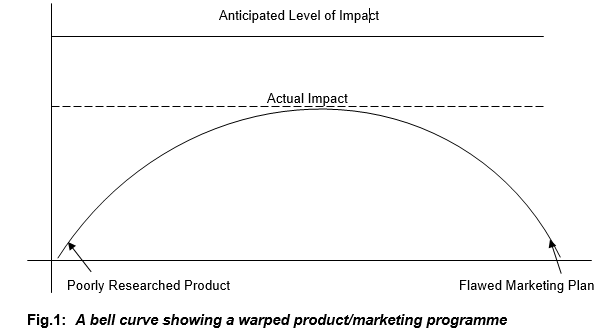
Since most companies are wary of a padded marketing budgets (expensive briefs), they settle for plan ‘B’, which the agencies would be most willing to implement as long as they land the job. Target groups are left out of the scheme. The end result is a warped marketing programme that does not take into consideration the basic elements that should be considered in a good marketing effort. This results in an arch that reflects a flawed marketing programme that is used in promoting a poorly researched product.
This phenomenon is best illustrated with the bell curve that shows the relationship between anticipated impact and actual impact in a poorly researched product and an equally poorly implemented marketing plan. The outcome smacks of ineptitude, short-sightedness and an outright refusal to get help to do things right!
In the words of Patricia Seybold author of The Customer Revolution: How to Thrive When Customers are in Control, “the so-called New Economy is really the Customer Economy. This means that customers are in control – they are shaping businesses and transforming industries. Customers’ experience matters to your business direction. In other words, the feelings customers have when they interact with a particular brand determine their loyalty to that brand…” The moment companies see these values as sine qua non then they are ready to do business. It does not come on a platter of gold. Many factors go into creating a winning strategy when building customer loyalty. The first is consumer research, comprising of the various segments such as psychographics, demographics and microanalysis of each of the four consumer types as well as their stimulants. The other factors are advertising, promotions and all the other marketing tie-ins.
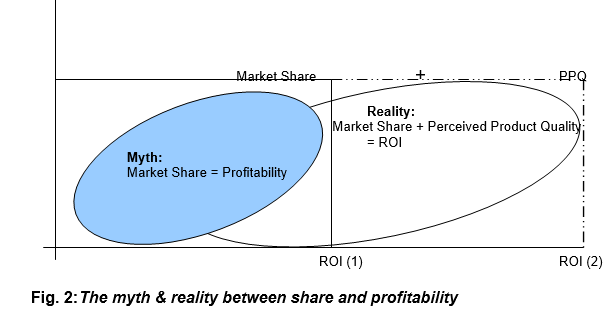
Another fallacy that is easily swallowed by most businesses is that a high share of market in a product category generally leads to economies of scale that result in a high level of profitability. To some extent this position still holds sway in the experience of some of our publicly quoted companies – Coca Cola Nigeria/Nigerian Bottling Company Plc, Nigerian Breweries Plc, Nestle Foods Plc, Cadbury Nigeria Plc as well as giants in the financial service industry, such as First Bank of Nigeria, Standard Chartered and United Bank for Africa Plc, etc. The bigger they are the more bullish their stocks. In fact, this postulation was first advanced in a study by Harvard Business School – that there is a strong correlation between market share and profitability – across a broad range of industries, companies and business units. Big meant better in everything.
One particular odious implication – a spin-off of the experience curve – is that a company could “buy” market share. Big discounts, for example or a heavy trade promotion could artificially create market share dominance, which in turn (it was argued) would yield the economies of scale essential to a high return on investment (ROI). Today, not much is being touted of the relativity between market share and profitability. But most proponents of the share-equals-profits connection – both consultants and corporate strategists – appear to have nibbled it only at the edge but not the whole way.
More recent evidence suggests that the relationship between share and ROI is much weaker than was previously discovered. “Perceived Product Quality” – PPQ – for example, is a dimension correlated with both share and ROI. Ignoring the underlying product quality factor in any share/profitability analysis greatly inflates the apparent correlation, i.e. the market share indicator tends to be overstated, leaving out product quality in the cold, which ties strongly to the earlier part of this discourse.
Taking it home, consider the vigour with which many industry components have chased market share more aggressively than corporate profitability. Note also, the heavy emphasis on promotional programmes among food products, bank products and other domestic products rather than determining what the consumer or customer wants. You can’t keep forcing bile down peoples’ throats and have a happy feeling about it! The result is that on realizing that the content is bile, people will regurgitate the contents, and then never go back to the vomit. It’s only logical. The consequence is a cannibalisation of that product or brand.
So, promotions can drive a market share but with a concomitant loss of profit; hear Roger Enrico, a one-time CEO of PepsiCo Worldwide Foods (trademark owners of Pepsi carbonated drinks): “Managing share without profit is like breathing air without oxygen. It makes you feel good for a while, but in the end it kills you…”
The bottom line is that market share is neither here nor there. At best, it is a proxy for ROI; it’s an alluring attraction on the road to decline. Market share is not the same thing as the real thing – return on investment. Market share is not static, it is dynamic and being able to capture a great share of the market today does not mean that you can retain that share for long. Managers and their advertising/marketing agencies should bear in mind that except they go the extra mile in enhancing product quality, have a strong understanding of the consumer that they serve, equating equity in a market segment with ROI becomes a suicidal marketing approach.
Oyagbola said, “We are committed to exploring avenues for meeting our customers’ increasing data needs in line with our vision to lead the delivery of a bold new digital world to our customers.
“As we work to maximise our data capabilities towards achieving broadband of international quality, our objective is to ensure that Nigerians experience a boost in the quality of broadband Internet services translating to the much needed enhanced data speeds and value to enhance personal and business productivity.”
She added, “The acquisition of Visafone highlights MTN’s commitment to Nigeria. More capacity will facilitate enhanced product/service offerings and experience in the data space to the delight of our valued customers.”
“Voice is still king. However, data is becoming increasingly important in our everyday lives and our energies are focused on enhancing data and Internet services to the benefit of our customers and the country at large.”
Visafone is the only surviving Code Division Multiple Access company in Nigeria offering a number of services, including voice, high-speed data (3G), Internet and other Value Added Services.