








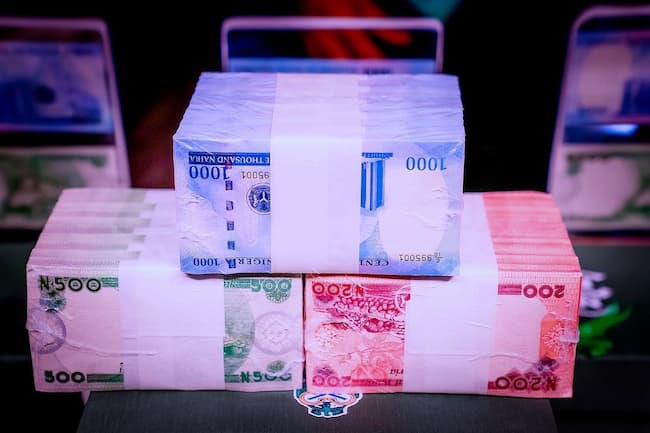
The Nigerian naira continued its downward slide on Wednesday, falling to ₦1,473.29 per US dollar at the official foreign exchange (FX) window, following the Central Bank of Nigeria’s (CBN) pause in FX sales to support liquidity.
Data from the FMDQ Securities Exchange showed that the local currency has maintained a consistent decline since the start of the week when it opened at ₦1,455 per dollar. The exchange rate weakened further midweek as dollar demand outpaced available supply in the official market.
CBN’s official FX data revealed that the naira touched an intraday high of ₦1,479 per dollar on Wednesday, while the lowest recorded rate during trading was ₦1,427 per dollar, highlighting heightened market volatility and fluctuating dollar demand.
The CBN has recently scaled back direct FX interventions, a move analysts say is part of efforts to allow market forces to determine exchange rates. However, the reduced supply has created short-term pressure on the naira.
At the close of Wednesday’s trading, the naira depreciated by 0.68% at the official window but showed marginal strength in the parallel market, appreciating by 0.54% to close at ₦1,488 per dollar.
Despite the currency weakness, Nigeria’s external reserves continue to rise. The nation’s gross reserves climbed to $42.632 billion as of October 13, up from $42.589 billion recorded the previous Friday. This upward trend reflects improved inflows from exporters and foreign portfolio investors (FPIs), who have increasingly participated in the Nigerian market in recent months.
Market watchers note that the naira’s recent performance is being closely tied to inflationary pressures and foreign exchange availability. The National Bureau of Statistics (NBS) earlier reported that Nigeria’s inflation rate fell to 18.02% in September — its lowest in three years — a development that could help stabilize the exchange rate if sustained.
In its latest research note, investment firm CardinalStone Partners said the ongoing decline in inflation supports positive expectations for the naira’s medium-term recovery. “The disinflationary trend, combined with steady FX reserve growth and current account surplus, should strengthen the naira in the coming months,” the firm stated.
The firm projected that the naira could close the year within the range of ₦1,400/$ to ₦1,450/$ if external reserves continue their upward trajectory and monetary tightening remains consistent.