








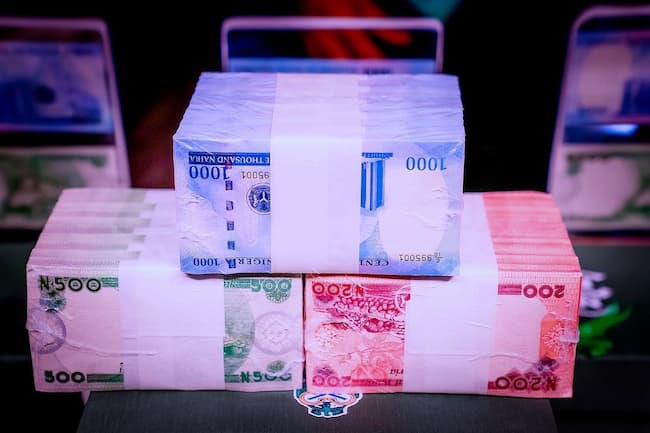
The naira extended its losing streak on Tuesday, depreciating by 0.39% to close at ₦1,463.23 per dollar at the official foreign exchange market, amid sustained demand for the U.S. dollar and renewed strength of the greenback globally.
According to updated figures from the Central Bank of Nigeria (CBN), the spot exchange rate weakened to ₦1,474 per dollar, marking an ₦11 depreciation from Monday’s ₦1,463 close.
In the parallel market, the naira further declined to ₦1,490 per dollar, signaling persistent demand pressures despite the CBN’s intervention. Intraday trading at the official window saw rates fluctuate between ₦1,467 and ₦1,474, underscoring market volatility.
Globally, the dollar index (DXY) continued its rebound, gaining nearly 3% since mid-September after recovering from its weakest level in over three years.
Last week, both official and parallel market rates for the naira had strengthened following improved foreign inflows and CBN’s continued intervention efforts. The local currency gained 1.02% week-on-week at the official market, closing at ₦1,455 per dollar, while parallel market rates improved to ₦1,465 per dollar, narrowing the spread between both markets to just ₦10.68.
A report by Coronation Merchant Bank Limited revealed that total FX inflows at the official window reached US$835.60 million in the reviewed week, slightly below the US$1.18 billion recorded previously.
Foreign portfolio investors accounted for the largest share of inflows at 31% (US$259.11 million), followed by exporters (20.3%), foreign direct investors (19.9%), and non-bank corporates (8.9%). The CBN supplied 14.89% of total inflows, while other sources contributed 12.2%.
The bank’s research arm noted, “We anticipate the naira will maintain a relatively stable outlook this week across FX segments, supported by steady CBN liquidity interventions and healthy foreign inflows, barring any unexpected macroeconomic disruptions.”