


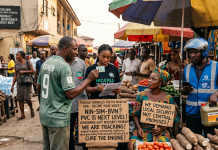






The Dangote Petroleum Refinery has successfully exported over 1.3 billion litres of Premium Motor Spirit (PMS), marking a significant milestone in Nigeria’s evolving energy sector. This development was disclosed by Africa’s richest man and President of the Dangote Group, Alhaji Aliko Dangote, at the Global Commodity Insights Conference on West African Refined Fuel Markets.
The high-profile event, organized by the Nigerian Midstream and Downstream Petroleum Regulatory Authority (NMDPRA) in collaboration with S&P Global Commodity Insights, served as a platform for discussing the region’s fuel trade dynamics.
Addressing delegates at the conference, Dangote revealed that between June and mid-July 2025, his refinery had exported about 1 million metric tonnes of petrol, which translates to nearly 1.35 billion litres.
“Today, Nigeria stands as a net exporter of refined petroleum products. Within just 50 days, we have exported around one million metric tonnes of PMS,” Dangote announced.
Despite this achievement, Nigeria continues to heavily depend on imported fuel. According to the NMDPRA, West African countries—Nigeria included—still rely on foreign suppliers for nearly 69% of their gasoline needs.
Speaking at the same event, the Chief Executive of NMDPRA, Farouk Ahmed, stated that the region currently trades about 2.05 million metric tonnes of gasoline monthly, with 69% of this coming from overseas markets.
In fact, data obtained from the Nigerian Ports Authority’s recent Shipping Position Daily confirms that within just eight days, Nigeria received a total of 231.88 million litres of imported PMS. These shipments, totaling 172,917 metric tonnes, arrived through major Nigerian ports in Apapa, Tincan, and Calabar.
Meanwhile, Dangote has responded to criticisms regarding market dominance, stating that his refinery is not aiming to monopolize the downstream sector.
“There is no plan for monopoly. The narrative being pushed is misleading. Instead of investing locally, many critics prefer to sit on the sidelines and move their wealth abroad,” Dangote asserted.
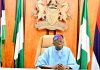
President Bola Tinubu also addressed the broader issue of Africa’s economic positioning in global energy markets. In a post on his official X (formerly Twitter) handle, Tinubu emphasized the need for Africa to redefine its role as more than just a passive participant in global pricing mechanisms.
“Africa must stop being a price taker. It’s time we establish transparent pricing benchmarks that represent our production realities,” Tinubu wrote.
According to the president, Nigeria is working with regional allies to create a unified energy market that would enhance energy security, encourage intra-African trade, and stimulate economic growth across borders.
“In refining, regulation, and data transparency, we are developing a market that not only secures energy for our people but also fosters prosperity throughout West Africa,” Tinubu added.
Furthering this agenda, the NMDPRA has commenced work on establishing a regional pricing benchmark for refined products. Ahmed confirmed that the authority is partnering with S&P Global to develop pricing indices for PMS, Automotive Gasoil (AGO), Aviation Turbine Kerosene (ATK), and Liquefied Petroleum Gas (LPG).
The initiative aims to bolster investment, enhance market trust, and provide real-time pricing transparency for stakeholders across the fuel value chain.
“We are laying the foundation for a competitive, data-informed fuel market that truly reflects regional supply and demand dynamics,” Ahmed concluded.




, marking a significant...)