






Nigeria’s Federal Government has reaffirmed its commitment to transforming the country into a $1 trillion economy, with senior officials insisting that ongoing macroeconomic reforms are beginning to yield measurable results.
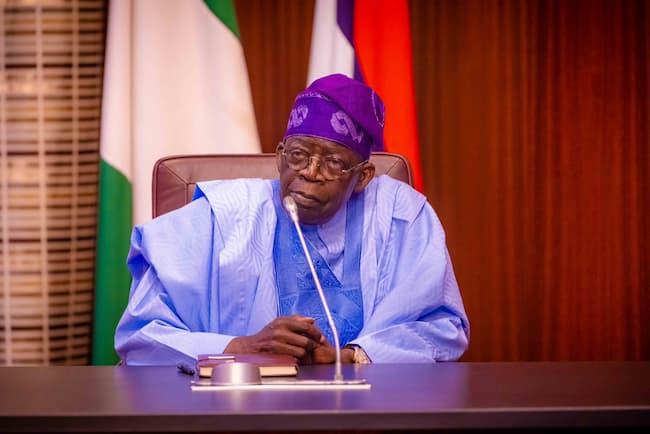
Speaking at the Annual General Meeting of the Finance Correspondents Association of Nigeria (FICAN) in Abuja, the Minister of State for Finance, Dr. Doris Uzoka-Anite, stated that President Bola Ahmed Tinubu’s economic target is not aspirational rhetoric but a clearly defined macroeconomic objective anchored in structural reforms.
Represented by the Assistant Director of Media and Public Relations at the ministry, Mrs. Uloma Amadi, the minister emphasized that the administration’s roadmap is structured around achieving sustained double-digit growth over the next decade.
From Structural Distortions to Reform-Led Recovery
According to the ministry, Nigeria’s Gross Domestic Product is currently valued at approximately $375 billion. To reach the $1 trillion benchmark, the country must record consistent annual growth between 10 percent and 12 percent over the next ten years. Officials acknowledged the scale of the challenge but described the ambition as necessary to reposition Africa’s largest economy.
When the current administration assumed office in 2023, it inherited what Uzoka-Anite described as “deep structural distortions,” including a fuel subsidy regime that reportedly consumed over N5 trillion annually and a fragmented foreign exchange system that weakened investor confidence.
The government responded with two major policy shifts: the removal of petrol subsidies and the unification of the foreign exchange market. Though both measures triggered short-term economic pain, the minister noted that neither policy has been reversed. She argued that emerging economic indicators now support the reform trajectory.
Credit Rating Upgrade Signals External Confidence
Citing external validation, the minister referenced S&P Global Ratings’ January 2026 decision to revise Nigeria’s outlook to positive while affirming its B-/B sovereign credit ratings. The ratings agency attributed the improved outlook to progress in fiscal management, monetary reforms, and external balance stabilization.
In addition, Nigeria’s removal from the Financial Action Task Force (FATF) grey list was highlighted as evidence of strengthened anti-money laundering and counter-terrorism financing frameworks, further boosting investor sentiment.
Recalibrating Public Spending for Growth
The Ministry of Finance disclosed that the federal budget framework has been redesigned to clearly distinguish between recurrent expenditure and capital investment. The new approach prioritizes infrastructure spending and growth-enhancing projects.
Officials stressed that public finance management now focuses not merely on expenditure volume but on asset creation and long-term economic returns.
Second-Phase Reform Strategy: DGAS
Uzoka-Anite outlined the Disinflation and Growth Acceleration Strategy (DGAS), developed in collaboration with the Central Bank of Nigeria. The policy framework aims to deliver non-inflationary economic growth exceeding 7 percent by 2027.
DGAS is structured around nine strategic pillars, including:
- Capital mobilisation via development finance instruments
- Sector-specific acceleration in agriculture, energy, manufacturing, and technology
- Nationwide energy expansion
- Digital infrastructure investment
- Large-scale human capital development
The strategy also expands access to consumer credit, enabling structured financing for housing, healthcare, education, and other essential services.
Industrialisation and Import Substitution
The minister expressed concern that approximately 70 percent of raw materials used in local manufacturing are imported, creating pressure on foreign exchange reserves. She cited the Dangote Refinery as a model of domestic resource processing that reduces import dependence. Similar processing-driven industrialization models are expected to be replicated across agriculture, mining, healthcare, and manufacturing.
Trade Integration Under AfCFTA
Nigeria has formally submitted its ECOWAS tariff schedule under the African Continental Free Trade Area, committing to zero tariffs on 90 percent of goods traded across the continent. Officials described the move as strategic positioning within an evolving global trade architecture.
NEXIM, BPE, and NSIA Outline Complementary Strategies
At the same event, the Managing Director of the Nigerian Export-Import Bank (NEXIM), Abubakar Bello, said the institution is advancing three core pillars to support the trillion-dollar ambition:
- Exporter empowerment
- AfCFTA trade leadership
- Infrastructure and logistics efficiency
Bello disclosed that the bank disbursed $108 billion to exporters in 2025 and urged financial journalists to highlight non-oil export growth as a driver of global investor confidence.
The Bureau of Public Enterprises (BPE) also underscored its role in developing Public-Private Partnership projects across energy, transport, agriculture, ICT, housing, and environmental services.
Meanwhile, the Nigeria Sovereign Investment Authority (NSIA) estimated that Nigeria requires between $100 billion and $150 billion annually to bridge its infrastructure deficit. Through the Presidential Infrastructure Development Fund, the NSIA says it is catalyzing private capital to execute projects to international standards.
Officials concluded that achieving a $1 trillion economy will depend on fiscal discipline, institutional reform, and a dynamic private sector ecosystem.